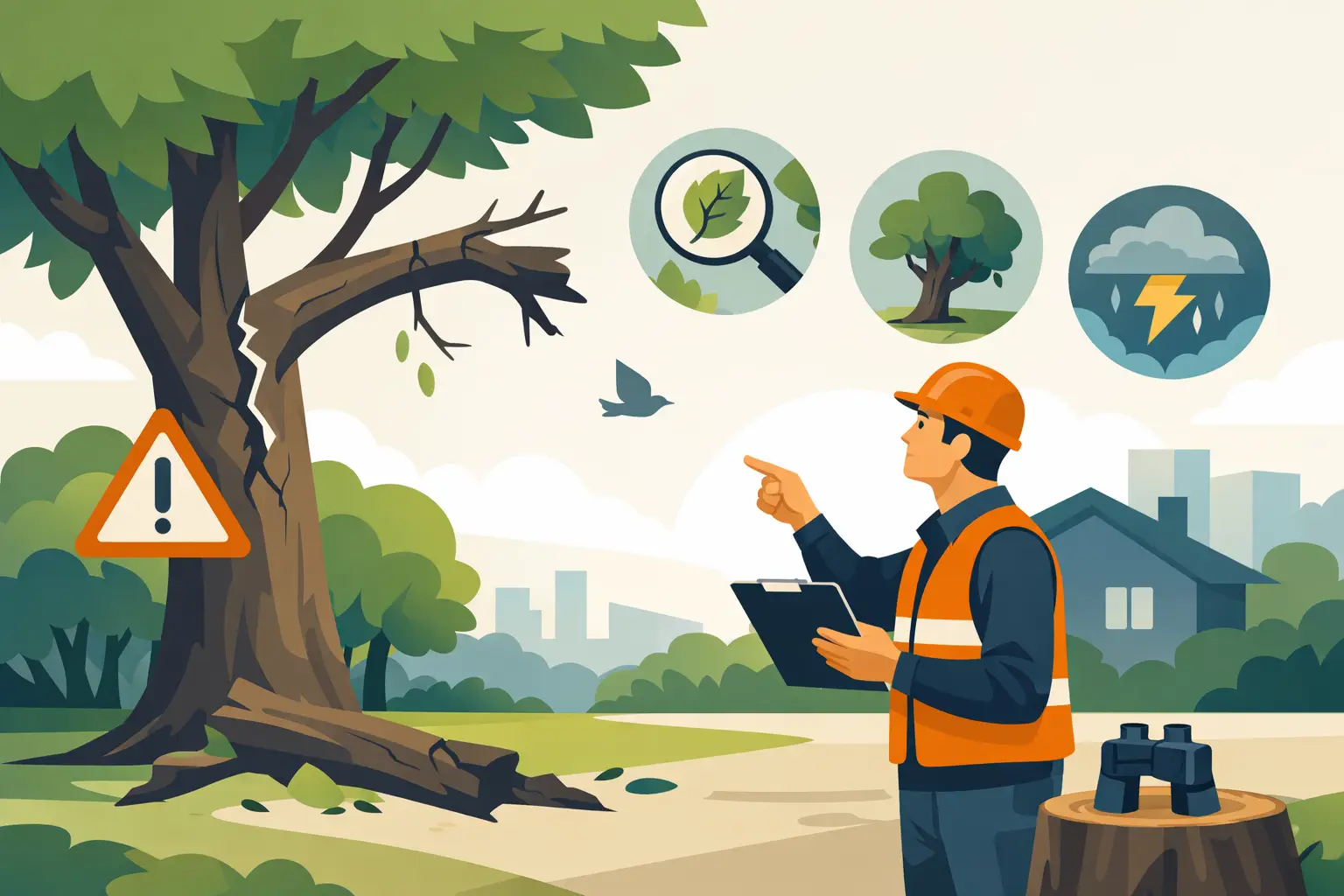
A tree does not have to fall to be a problem. In Plymouth and across the West Metro, a cracked limb over a driveway, root damage near a foundation, or a trunk weakened by decay can turn into property damage fast. That is why hazardous tree assessment matters. It helps homeowners and property managers spot risk early, make better decisions, and avoid waiting until the next storm makes the decision for them.
Most risky trees do not look dramatic from the street. Some still have green leaves. Some are only partly damaged. Others have a defect that has been getting worse for years, quietly, until wind, heavy snow, or saturated ground pushes it past the limit. A good assessment is not about guessing. It is about reading the signs, understanding what is changing, and deciding whether pruning, removal, or monitoring is the right next step.
What a hazardous tree assessment actually looks for
At a basic level, the goal is simple: identify whether a tree or part of a tree is likely to fail and whether that failure could hit something that matters. Risk comes from both pieces. A weak tree in the back corner of a large lot is different from a weak tree hanging over a house, sidewalk, parking area, or play space.
The assessment starts with the tree itself. Trunk cracks, cavities, dead limbs, weak branch unions, fungal growth, hollow sections, exposed roots, and soil movement all tell part of the story. Lean matters too, but not every leaning tree is hazardous. Some trees naturally grow at an angle and stay stable for years. A newer lean, especially with raised soil or root plate movement, is a different issue and usually deserves quicker attention.
The canopy is another key clue. Deadwood, thinning leaves on one side, large broken limbs, and uneven weight distribution can point to structural stress. In mature trees, long heavy limbs over roofs or garages may need reduction or removal even if the rest of the tree is still worth keeping. Sometimes the problem is not the whole tree. It is one section that has become unsafe.
Why trees become hazardous
Storms get the blame most often, but weather is usually the trigger, not the full cause. Trees usually fail because an existing defect was already there. Wind, ice, and heavy snow simply expose it.
Root damage is a common issue in residential settings. Construction, grading, trenching, driveway work, and repeated soil compaction can weaken a tree long before the canopy shows obvious symptoms. Homeowners may notice decline months or years later and not connect it back to the earlier disturbance.
Decay is another major factor. It can start from storm wounds, old pruning cuts, mower damage, or insect activity. Once decay spreads into the trunk or main scaffold limbs, strength drops. The hard part is that decay is not always visible from the outside. A tree can appear alive and still have serious structural loss inside.
Poor branch structure also causes problems. Co-dominant stems with tight bark unions are common failure points, especially in maples and other fast-growing yard trees. If those stems split, the damage is often sudden and severe. Early pruning can reduce that risk, but once the tree is mature, options depend on size, location, and the extent of the defect.
Hazardous tree assessment after storms
After a storm, property owners usually look for the obvious damage first – hanging branches, split tops, limbs on the roof, or a tree laying across a fence. Those are urgent issues, but storm damage is not always that visible.
A tree may have twisted without fully breaking. A large limb may be cracked and still attached. Roots may have shifted just enough to reduce stability. In some cases, the tree stays standing through one storm but is much more likely to fail in the next one. That is where a post-storm hazardous tree assessment is especially useful.
This is also when quick decisions can go wrong. People often want to save every damaged tree, or they assume every damaged tree needs to come down. Both instincts can be off. Some trees respond well to corrective pruning. Others have enough hidden damage that removal is the safer and more cost-effective choice. It depends on the species, the defect, the target below, and how much sound structure remains.
Common warning signs around homes and managed properties
Property owners do not need to diagnose trees on their own, but a few warning signs should move a tree to the top of the list for inspection. Fresh cracks in the trunk, peeling bark over dead sections, large dead limbs, mushrooms near the base, sudden leaning, exposed or damaged roots, and repeated limb drop all deserve attention.
For property managers, patterns matter. If one tree near a parking lot has repeated deadwood or visible defects, nearby trees of the same age and species may need a closer look too. The same goes for trees near sidewalks, tenant entrances, garages, and shared outdoor areas where liability concerns are higher.
Timing matters as well. Late winter and spring often reveal storm stress from snow load. Summer can expose canopy decline. Fall is a good time to look at structure before winter weather returns. But if a tree is showing obvious warning signs now, waiting for a better season is not the right move.
When pruning helps and when removal is the safer call
One of the most common questions is whether a hazardous tree can be saved. Sometimes yes. Sometimes no.
If the issue is limited deadwood, a damaged limb, canopy imbalance, or a branch overextending toward a structure, pruning may reduce the risk and keep the tree in place. Good pruning is targeted. It removes the problem without creating bigger wounds or stripping the tree to the point of decline.
Removal becomes the better option when the defect affects the main trunk, major root support, or a large percentage of the canopy structure. It also makes sense when the tree sits close to a home, garage, fence line, or utility area and the consequences of failure are too high. A tree does not have to be completely dead to justify removal. If the risk is rising and the target is significant, waiting can cost more than acting sooner.
There is also the practical side. Some trees can technically be preserved, but doing so may require repeated pruning with no guarantee of long-term safety. In that situation, removal may be the cleaner and more dependable answer for the property owner.
Why professional assessment matters
Hazardous tree work is not a good place for guesswork. The challenge is not just spotting a defect. It is judging severity, likely failure points, and what could happen if the tree or limb comes down.
A professional assessment brings field experience that most property owners do not have. That includes reading load patterns, identifying decay indicators, noticing root zone problems, and understanding how different species respond to damage. It also means looking at access, nearby structures, and what safe removal or pruning would actually involve if work is needed.
For local homeowners, that practical view matters. The right recommendation is not only about the tree. It is about protecting the house, the yard, the driveway, the fence, and everything around it. That is the kind of straightforward safety-first approach companies like Xtreme Tree Service MN bring to the job.
What to do if you suspect a hazardous tree
If something looks off, take pictures from a safe distance and avoid standing under suspect limbs. Do not try to cut large broken branches yourself, especially if the tree is leaning, cracked, or near structures. Damage that looks manageable from the ground can shift quickly once weight starts moving.
The next step is simple: get the tree looked at before the next round of wind or heavy weather. Fast action does not always mean emergency removal. Sometimes it means confirming the tree is stable for now. Sometimes it means scheduling pruning before the problem grows. And sometimes it means removing the tree before it chooses its own timing.
A good hazardous tree assessment gives you clarity. It tells you what is urgent, what can wait, and what is worth fixing. For homeowners and property managers, that is the real value – fewer surprises, less risk, and a safer property without a lot of back and forth.
If a tree on your property has you second-guessing where you park, where your tenants walk, or what might happen in the next storm, that is usually reason enough to have it checked.