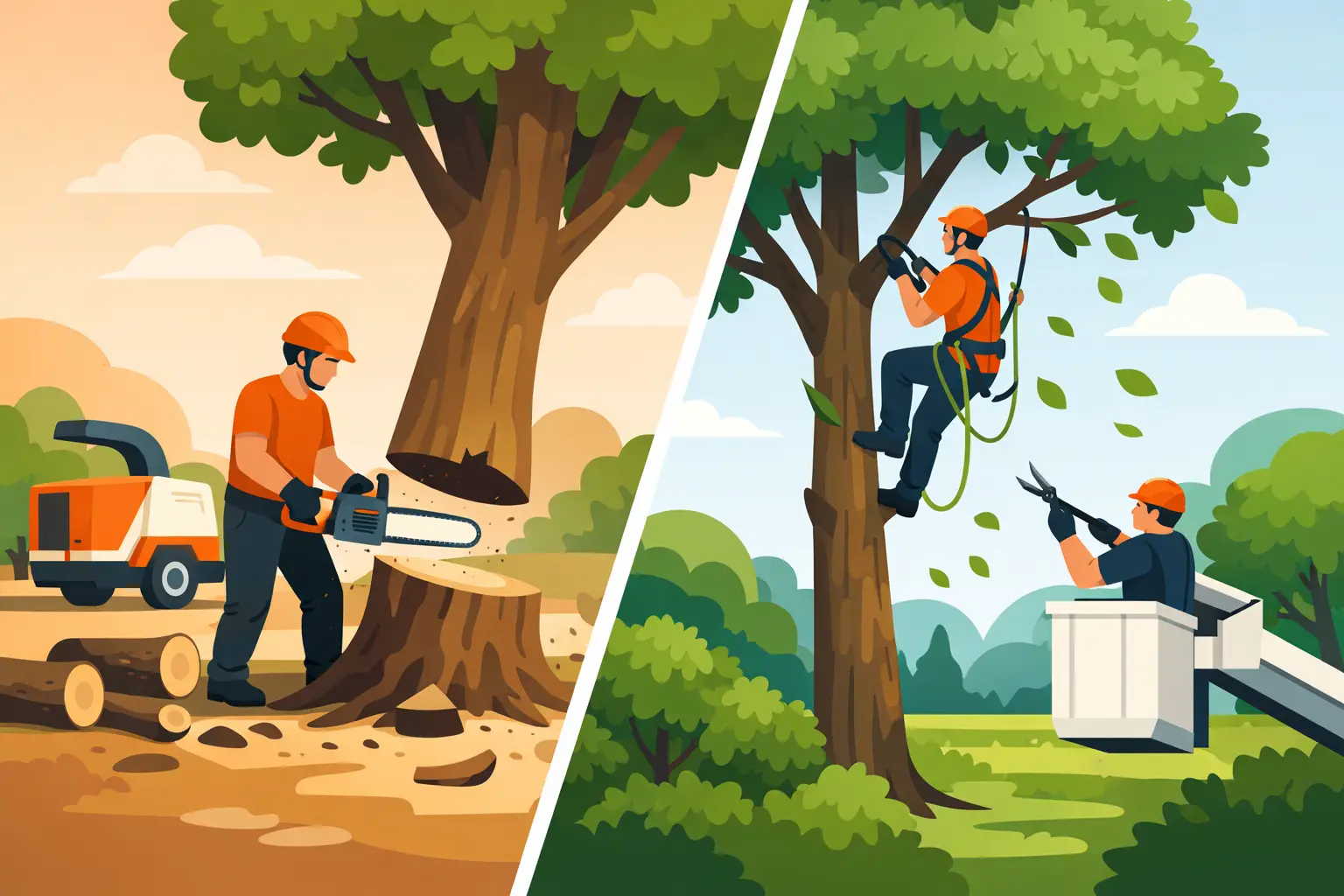
A branch hanging over the driveway after a windstorm gets your attention fast. So does a tree leaning a little more each year, or limbs scraping the roof every time the wind picks up. When homeowners compare tree removal versus tree trimming, the real question is usually simpler: can this tree be made safe and healthy, or is it time for it to go?
That answer depends on the tree, the damage, and what it can do to the property if it fails. In Plymouth and across the West Metro, mature trees add value, shade, and privacy. They can also create real risk when they are dead, declining, overgrown, storm-damaged, or planted too close to a house, garage, fence, or power line.
Tree removal versus tree trimming: what is the difference?
Tree trimming means cutting selected branches to improve clearance, shape, safety, or tree health. In many cases, trimming solves the problem. It can pull limbs back from a roof, open up a crowded canopy, remove deadwood, reduce end weight on heavy branches, and improve visibility around driveways and walkways.
Tree removal is different. Removal means taking the entire tree down, usually because the tree is no longer safe, no longer structurally sound, or no longer worth preserving. Once a tree is removed, the issue is over, but so are the shade, screening, and landscape value that tree provided.
That is why this is not just a price question. Trimming is often the better option when the tree is healthy and the problem is limited to certain limbs. Removal is the right call when the whole tree has become the problem.
When trimming makes sense
A lot of trees do not need to be removed. They need targeted work by a crew that knows how to reduce risk without overcutting the canopy. Trimming is usually the better option when the trunk is solid, the root system is stable, and the main issue is branch growth or localized damage.
For example, if branches are growing over the house, brushing against siding, dropping debris into gutters, or blocking sunlight from a yard, trimming can correct those issues without losing the tree. The same goes for dead or broken limbs after a storm, especially if the overall structure of the tree is still sound.
Trimming can also help younger trees develop better form. Poor branch spacing, crossing limbs, and low limbs over sidewalks or driveways are easier to address early than after they become larger hazards. On mature trees, proper pruning can reduce stress on heavy limbs and improve clearance from structures and traffic areas.
That said, more cutting is not always better. Aggressive topping or removing too much live canopy can weaken a tree, encourage poor regrowth, and create future hazards. Good trimming should solve a problem, not create a bigger one a year later.
Signs a tree may only need trimming
If the tree is alive and growing well, the trunk has no major decay, and the problem is isolated to a few limbs, trimming is often enough. Common examples include overhanging branches, minor storm breakage, deadwood in the canopy, and limbs crowding a roofline or neighboring trees.
In these cases, trimming is the practical middle ground. It improves safety and appearance while keeping the tree in place.
When removal is the safer choice
Some trees are past the point where trimming helps. A dead tree, a tree with significant trunk decay, a major split, root failure, or a hard lean toward a structure is not usually a trimming job. Cutting a few branches off may reduce some weight, but it does not fix a failed root system or hollow trunk.
Removal is often the right decision when the risk is in the core structure of the tree. If the tree could fail at the base or snap through the main stem, keeping it standing can put the house, vehicles, fencing, landscaping, and people at risk.
Location also matters. A tree that might stand for years in the back edge of a large lot is a different situation than the same tree hanging over a garage, deck, or shared property line. Property managers especially have to think about liability. If a tree shows obvious signs of failure and damages nearby property, delaying the decision can become expensive quickly.
There are also cases where removal is the practical choice even if the tree is still partly alive. Trees with severe storm damage, insect decline, repeated large limb failure, or growth too close to foundations and structures may continue to create maintenance and safety problems year after year. At that point, removal can be cleaner, safer, and more cost-effective than repeated corrective trimming.
Common signs removal may be needed
A tree should be looked at closely if it is dead, losing bark, showing fungus at the base, dropping large limbs, leaning suddenly, or showing visible cracks in the trunk or main unions. Root disturbance after construction can also weaken a tree more than many owners realize.
If the tree is threatening a home, garage, driveway, or pedestrian area, it is worth addressing sooner rather than later.
Cost matters, but it should not be the only factor
Homeowners often compare removal and trimming based on price first, which is understandable. Trimming is usually less expensive than full removal because the crew is not dismantling and hauling off an entire tree. But the lower price only helps if trimming actually solves the problem.
If a tree is structurally unsound, repeated trimming can turn into a temporary fix that keeps costing money without reducing the real hazard. On the other hand, removing a healthy tree just because it is messy or overgrown can be unnecessary if pruning would restore clearance and control.
The right choice usually comes down to value over time. A solid trimming job can extend the safe life of a healthy tree and improve the property right away. A necessary removal can prevent major repair costs from a future failure. Either way, the cheapest short-term option is not always the least expensive decision in the long run.
Safety and property protection are a big part of the decision
Tree work is not just about the tree. It is about what is around it. Houses, garages, fences, decks, retaining walls, utility lines, and landscape beds all affect how work should be done.
That is one reason the decision between trimming and removal should be made with the work process in mind. A large branch over a roof may be safely rigged down through careful trimming. A dead tree in a tight backyard may require sectional removal to protect the property. The condition of the tree, access to the site, and what could be damaged below all influence the best approach.
For homeowners, this is where experience matters. It is easy to underestimate how quickly a compromised limb or trunk section can shift once cuts are made. A professional crew should be thinking ahead about drop zones, rigging, equipment access, cleanup, and protection for the lawn and nearby structures before the first cut starts.
How to decide what your tree actually needs
Start with the basics. Is the tree alive and generally healthy? Is the problem limited to a few branches, or does it involve the trunk, roots, or overall stability? Has the tree already dropped major limbs or shifted in a noticeable way? Is it close enough to a structure that failure would cause damage?
If the issue is clearance, shape, deadwood, or manageable storm damage, trimming is often the answer. If the issue is decay, death, instability, major splitting, or repeated hazard, removal is usually the safer route.
In many cases, the answer is not dramatic. It is just practical. A good estimate should explain what the crew sees, what can reasonably be corrected, and what cannot. That kind of clear communication matters more than pushing one service over another.
For local homeowners and property managers, the best tree company is not the one that recommends removal every time. It is the one that looks at the actual condition of the tree, the risk to the property, and the most sensible way to handle it. That is the standard Xtreme Tree Service MN works from on every estimate.
Tree removal versus tree trimming after storm damage
After a storm, the choice can be less obvious. A tree may look rough but still be salvageable. Or it may still be standing even though the structure is badly compromised.
If damage is limited to a few broken limbs and the main trunk and root plate are intact, trimming may restore the tree safely. If the tree has split leaders, a torn trunk, severe canopy loss on one side, or lifted roots, removal may be the better call. Storm work should move quickly, but not blindly. A fast response is important, and so is making the right call the first time.
The best next step is not guessing from the ground. It is getting a straightforward assessment from a crew that can explain the risk, protect the property during the work, and leave the site clean when the job is done. A healthy tree is worth keeping when it can be kept safely. When it cannot, removing it before it fails is often the smartest way to protect your home and move on with confidence.