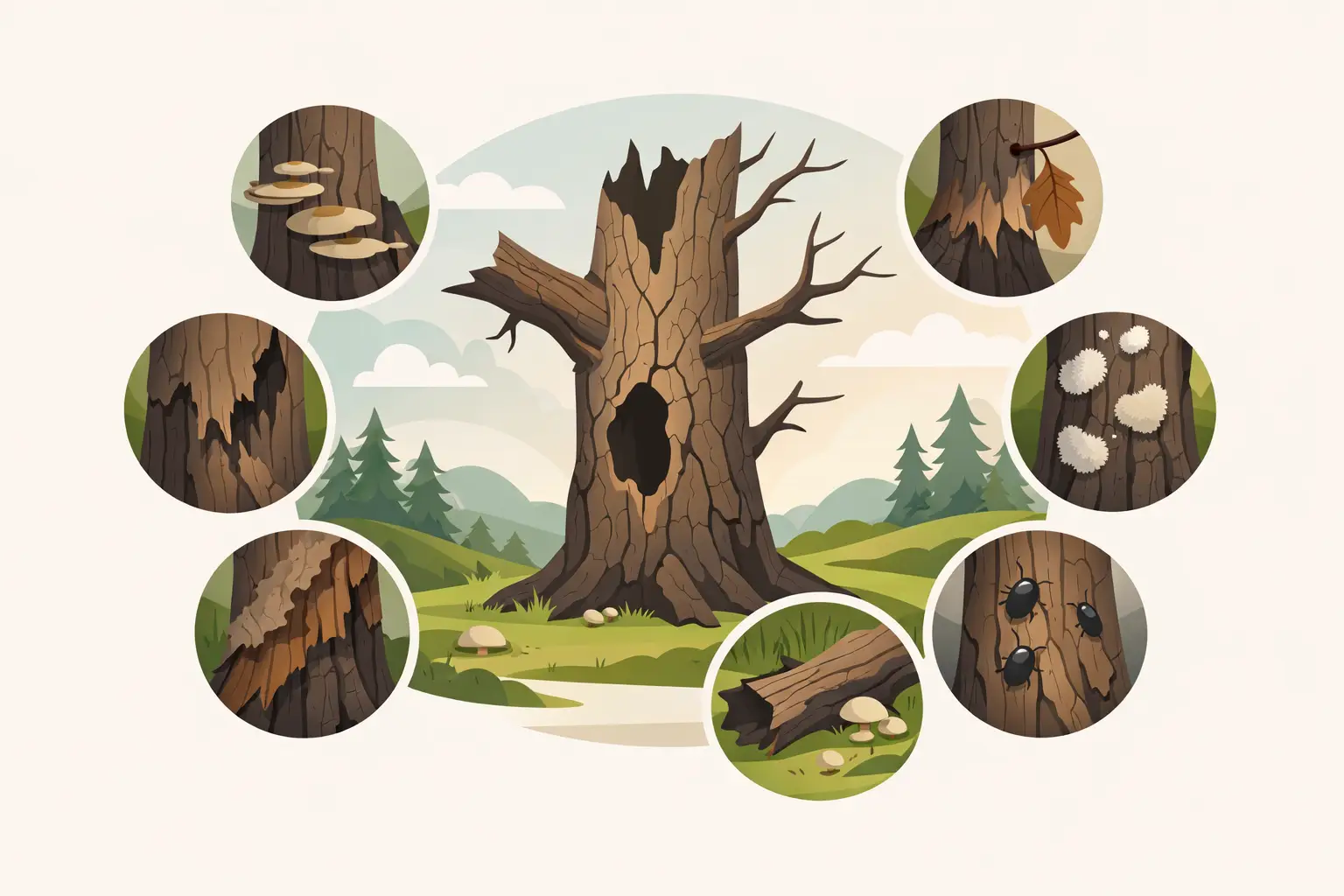
A tree can look solid from the driveway and still be failing where it matters. For homeowners in Plymouth and the West Metro, that is what makes the early signs of tree decay easy to miss. By the time a trunk splits, a large limb drops, or the tree starts leaning, the problem has usually been building for a while.
Decay does not always mean a tree needs to come down right away. Sometimes the issue is limited to one section and can be managed with pruning or monitoring. Other times, decay has weakened the main structure enough that removal becomes the safest option. The key is knowing what to look for before weather, weight, or time turns a manageable problem into property damage.
Why tree decay matters on residential properties
Tree decay is more than a cosmetic issue. It affects strength, stability, and the tree’s ability to handle wind, snow, and heavy rain. In Minnesota, those seasonal loads matter. A tree with internal rot may stand through calm weather, then fail during a summer storm or under wet spring snow.
For property owners, the risk is practical. Decayed trees can damage roofs, garages, fences, vehicles, and nearby landscaping. They can also create liability concerns in shared spaces, rental properties, and commercial sites. That is why visible warning signs deserve attention, even when the tree is still leafing out.
7 signs of tree decay
1. Dead or dying branches in the canopy
One of the most common signs of tree decay is deadwood in the upper canopy. If large branches are bare while the rest of the tree is in leaf, or if limbs snap off easily and have dry, brittle interiors, the tree may be losing vascular function or dealing with internal decline.
A few dead twigs are normal on mature trees. Large dead limbs are different. When multiple scaffold branches show decline, especially on one side of the tree, that can point to deeper structural or root-related trouble.
2. Cavities or hollow sections in the trunk
A visible cavity does not automatically mean a tree is unsafe, but it does mean decay has already been present long enough to break down wood. Some trees can tolerate a hollow section for years if enough sound wood remains around the outside. Others become high-risk quickly, especially when the cavity is large, low on the trunk, or near a major union.
What matters is not just the hole you can see. It is how much solid wood is left carrying the load. That is not something most homeowners can judge from ground level.
3. Fungus growing on the trunk, root flare, or nearby soil
Mushrooms and shelf fungi are among the clearest external indicators that decay may be active. If fungal growth is appearing on the trunk, around the base of the tree, or over exposed roots, it can mean dead wood is being broken down internally.
Not every fungus is a sign of severe structural failure, and species matter. Still, fruiting bodies on or around a tree should not be brushed off as harmless yard growth. In many cases, they are one of the more visible clues that rot is present below the bark or in the root system.
4. Cracked, peeling, or missing bark
Bark protects the living tissue underneath. When bark begins to fall away in large patches, split vertically, or separate from the trunk, it may signal stress, disease, or dead tissue beneath the surface. If the exposed wood underneath looks soft, dark, crumbly, or wet, decay is more likely.
Context matters here. Some species naturally shed small amounts of bark, and minor surface damage can heal. But widespread bark loss paired with dead limbs, fungal growth, or insect activity usually points to a bigger problem.
5. Soft, spongy, or crumbly wood
If wood near a wound, pruning cut, or cavity feels soft instead of firm, that is a strong warning sign. Decay changes the structure of the wood. It may become punky, damp, stringy, or crumbly depending on the type of rot involved.
Homeowners sometimes notice this after a branch breaks and exposes the inside. Healthy wood is dense and solid. Decayed wood often looks discolored and gives way easily. If that softness is in the trunk or at the base of a major limb, the concern goes up fast.
6. Leaning that appears new or worse than before
A tree that has always grown with a slight lean is not necessarily decayed. A tree that suddenly starts leaning, or shows fresh soil movement around the roots, is a different situation. When root decay is present, the tree may lose anchoring strength even if the canopy still looks fairly normal.
Look closely for raised soil, cracking ground, exposed roots, or a lean toward a house, driveway, or neighboring property. Those are signs to take seriously, especially after storms or saturated ground conditions.
7. Large wounds, old storm damage, or weak branch unions
Decay often starts where the tree has been injured. Old storm tears, topping cuts, trunk wounds, and branch unions with included bark can all create openings where moisture and fungi move in. Over time, the wood around those areas may weaken enough to split or fail.
This is common on older landscape trees that have taken repeated pruning cuts or weather damage over the years. The wound may be old, but the structural decline can continue long after the original damage happened.
Signs of tree decay at the base are especially important
When decay is in the roots or lower trunk, the risk tends to be more serious because that area supports the whole tree. Watch for mushrooms at the base, cavities near the root flare, soft wood around exposed roots, and trunk swelling or sinking soil nearby.
Base decay can be harder to spot from a distance, which is why many homeowners do not notice it until a tree starts shifting or dropping major weight. If anything looks off at ground level, it is worth getting checked. Problems in that area usually do not improve on their own.
When decay may be manageable
Not every decayed tree needs immediate removal. A tree might still be a good candidate for selective pruning, weight reduction, cabling, or regular monitoring if the decay is limited and the main structure remains sound. Species, size, location, and target area all matter.
For example, a backyard tree with a minor cavity and no major lean may be manageable for years. A similar defect on a large tree hanging over a roof, parking area, or play space is a different call. Risk is not only about the tree’s condition. It is also about what the tree could hit if it fails.
When to stop watching and call a pro
If you see multiple signs at once, do not wait for the next storm to make the decision for you. A combination of dead limbs, trunk fungus, bark loss, cavities, and lean usually points to a tree that needs a closer look soon.
This is especially true if the tree is close to a home, garage, sidewalk, fence line, or utility area. Tree failure is unpredictable once decay reaches key structural wood. What looks stable in calm weather can change fast with wind or saturated soil.
A professional inspection helps answer the practical questions homeowners actually care about. Is the tree safe to keep for now? Can pruning reduce the risk? Is removal the smarter choice before it becomes an emergency? A good estimate should give you a clear recommendation without pressure.
What homeowners should not do
It is tempting to poke at a cavity, cut out mushrooms, or remove a suspect limb yourself to see what is going on. That usually does not tell you enough, and in some cases it makes the tree less stable. Climbing a compromised tree or cutting heavy limbs from one is not worth the risk.
It is also easy to underestimate how much decay is hidden inside. Trees can hold a surprisingly normal shape even after losing a lot of internal strength. That is why surface appearance alone can be misleading.
For homeowners and property managers in the West Metro, the safest move is simple: if a tree shows clear signs of decline and sits anywhere near something valuable, treat it like a safety issue, not just a yard issue. Xtreme Tree Service MN sees this often after storms, but the best time to deal with decay is before the weather does it for you.
A tree does not need to be completely dead to be unsafe. If something looks off, trust that instinct and get it checked before a small warning sign becomes a bigger cleanup job.