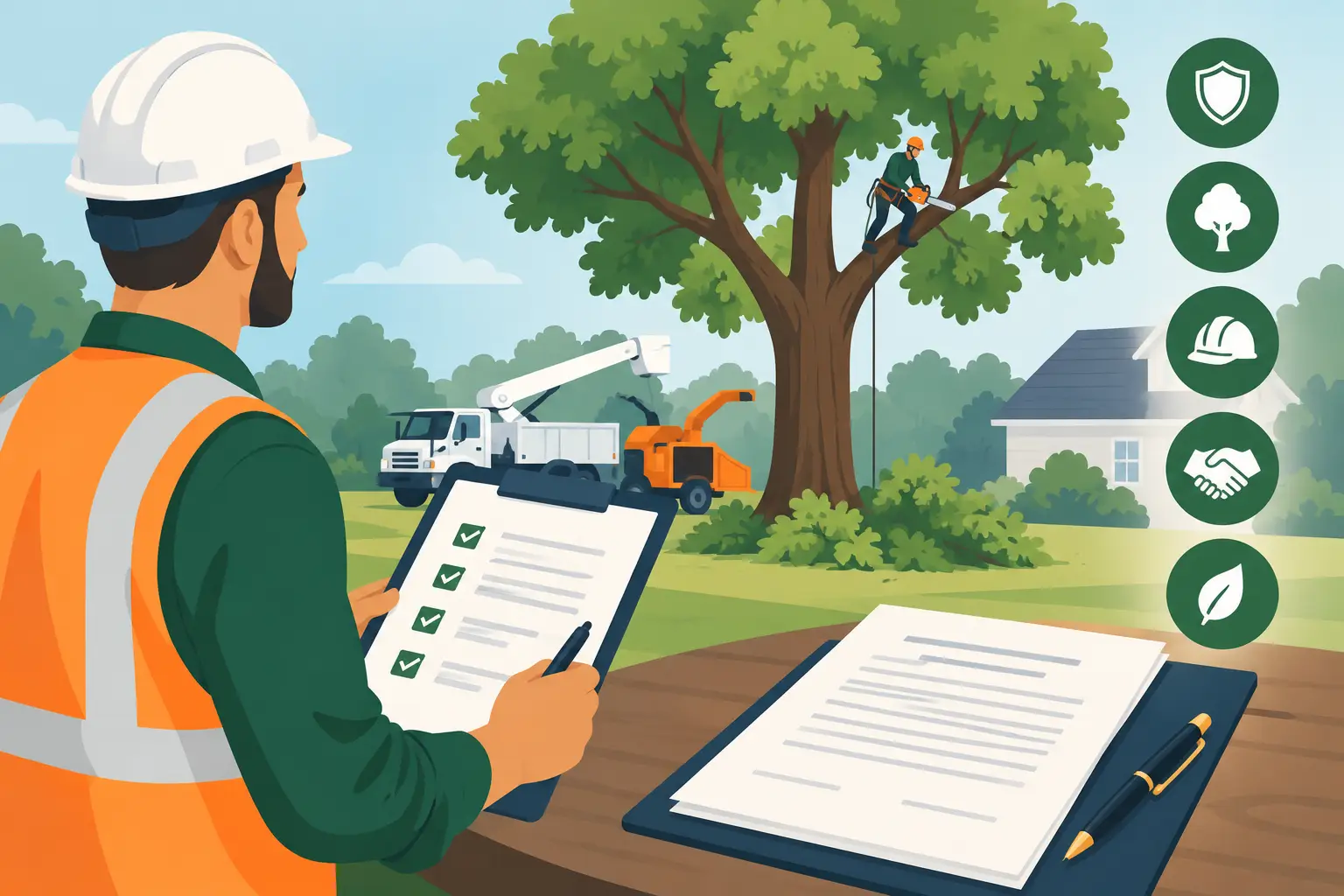
A tree crew arrives with chainsaws, trucks, ropes, and a clear plan. Before any of that happens, the details should be in writing. Tree service contracts give homeowners and property managers a practical record of what will be done, what it will cost, and how the property will be handled from arrival through cleanup.
For a routine trimming job, a written agreement may be brief. For a large removal near a house, power line, fence, or shared property line, it needs more detail. The goal is not to make a simple job complicated. It is to prevent surprises when the work involves safety, access, debris, and valuable property.
Why a Written Tree Service Agreement Matters
Tree work is not like scheduling a basic yard cleanup. A crew may need to work above a roof, lower branches over landscaping, bring equipment through a gate, or remove a damaged tree after a storm. Conditions on site can affect the job, and a clear agreement gives both sides a reference point if questions come up.
For homeowners, the biggest benefit is knowing what is included. For property managers, a written scope helps with approvals, budgeting, tenant communication, and records. It also gives everyone a better understanding of timing, access needs, and who is responsible for decisions if conditions change.
A good agreement should be clear enough that you can read it and picture the finished job. If the wording leaves you unsure whether the stump will be ground, whether logs will stay, or whether brush will be hauled away, ask before scheduling.
What Tree Service Contracts Should Clearly Cover
The best tree service contracts are specific without being overloaded with legal language. They should explain the work in plain terms and identify the property where it will be completed.
The scope of work
The agreement should identify the tree or trees involved and describe the planned service. “Trim oak tree in front yard” is a starting point, but more detail is better when the job is complex. A useful scope might state that deadwood will be removed, low branches over the driveway will be raised, or limbs extending over the roof will be selectively pruned.
For removals, the contract should say whether the tree will be taken down in sections, whether wood will be hauled away or left for the owner, and whether brush and smaller debris are included. If a stump is staying, that should be stated. If stump grinding is part of the job, the expected depth and handling of grindings should be discussed.
Tree pruning also deserves a careful description. Proper pruning is not simply cutting a tree back as far as possible. The work should match the reason for the service, whether that is clearance, dead branch removal, storm damage reduction, visibility, or improving the tree’s structure.
Price and payment terms
The proposal should show the total price or clearly explain how pricing will be determined. Most residential tree work is quoted by the job because size, access, equipment needs, and risk vary from one property to the next.
Ask whether the price includes labor, equipment, hauling, cleanup, stump work, and disposal. If the crew finds hidden damage, decay, embedded wire, or another condition that changes the work, there should be a process for discussing the added cost before proceeding. No one wants to find out after the truck leaves that a necessary part of the job was treated as an extra.
Payment timing should also be straightforward. A homeowner should know whether payment is due upon completion, whether a deposit is needed for a larger project, and what forms of payment are accepted.
Site access and property protection
Tree crews need room to work safely. The agreement may address access through a driveway, yard, side gate, or parking area. It may also note whether vehicles need to be moved, gates unlocked, pets secured, or outdoor furniture relocated before the crew arrives.
Property protection matters just as much. A professional crew should plan around homes, garages, fences, gardens, patios, utility lines, and nearby structures. Still, tree work can require heavy equipment, especially after rain or during a large removal. If equipment must cross turf or enter a tight area, the contractor should explain the plan and any reasonable limits to what can be protected.
In Plymouth and throughout the West Metro, mature trees often sit close to homes and established landscaping. That makes site planning more than a formality. It is one of the main reasons to get eyes on the property before a price is given.
Cleanup and material handling
“Cleanup included” can mean different things to different people. The agreement should clarify whether the crew will chip brush, haul wood, rake the work area, remove sawdust, or leave logs at the property. It should also identify whether stump grindings will be removed or left in a pile for the owner to spread or dispose of.
A clean job site is part of a completed job. That does not mean every leaf or wood chip disappears from a large work area, but it does mean the crew should remove the agreed debris and leave the space orderly and safe.
Insurance, Permits, and Utility Concerns
Before hiring a tree company, ask for proof of appropriate insurance. Tree work has real risks, and a contractor should be prepared to discuss coverage clearly. If the job involves a commercial site, multiple units, or a managed property, your organization may have additional insurance documentation requirements.
Permits can depend on the municipality, the tree’s location, and the type of work. A reputable contractor can help identify when local requirements may apply, but property owners should not assume every removal is automatically permit-free. This is especially relevant for protected trees, boulevard trees, and work near public right-of-way areas.
Overhead utility lines require special caution. A tree service should not treat electrical hazards as ordinary trimming work. If branches are close to energized lines, the correct approach may involve the utility company or a qualified line-clearance provider. A written agreement cannot remove that risk, but it should make clear when the work is outside the crew’s scope.
Storm Damage Changes the Conversation
After a storm, quick action matters, but rushed decisions can create problems. Emergency work often focuses first on making the property safer: removing a limb from a roof, clearing a driveway, or securing a broken tree that could cause more damage.
In these situations, the initial agreement may cover emergency stabilization and debris removal, while final cleanup or additional pruning is scheduled later. That is normal. Storm damage can hide cracks, root movement, roof damage, and unstable limbs that are not visible from the ground.
If an insurer is involved, take photos before cleanup when it is safe to do so. Keep copies of the written estimate, invoice, and any notes about emergency work. The tree company’s job is to handle the tree safely, while insurance coverage decisions remain between the property owner and insurer.
Questions Worth Asking Before You Approve the Work
You do not need to be an arborist to review a proposal. You do need enough information to know what you are approving. Before signing, make sure you can answer these questions:
- Which trees or branches are included in the work?
- Is stump grinding included, optional, or excluded?
- Will logs, brush, chips, and sawdust be removed or left on site?
- What access does the crew need, and what should be moved beforehand?
- How will changes in scope or unexpected site conditions be handled?
- When is the work expected to be completed, and when is payment due?
If the answers are not clear, ask for the proposal to be updated. A good contractor would rather answer a question before the job than sort out a misunderstanding afterward.
Clear Terms Lead to Better Tree Work
A written agreement is not about mistrust. It is a practical way to set expectations for a job that can involve heights, heavy equipment, changing weather, and close work around a home or commercial property.
For routine pruning, removal, stump grinding, or storm cleanup, look for a tree company that explains the work plainly, protects the property, and follows through on cleanup. Xtreme Tree Service MN believes customers should know the plan before the first cut is made. A clear estimate and direct conversation are usually the best place to start.
Leave a Reply