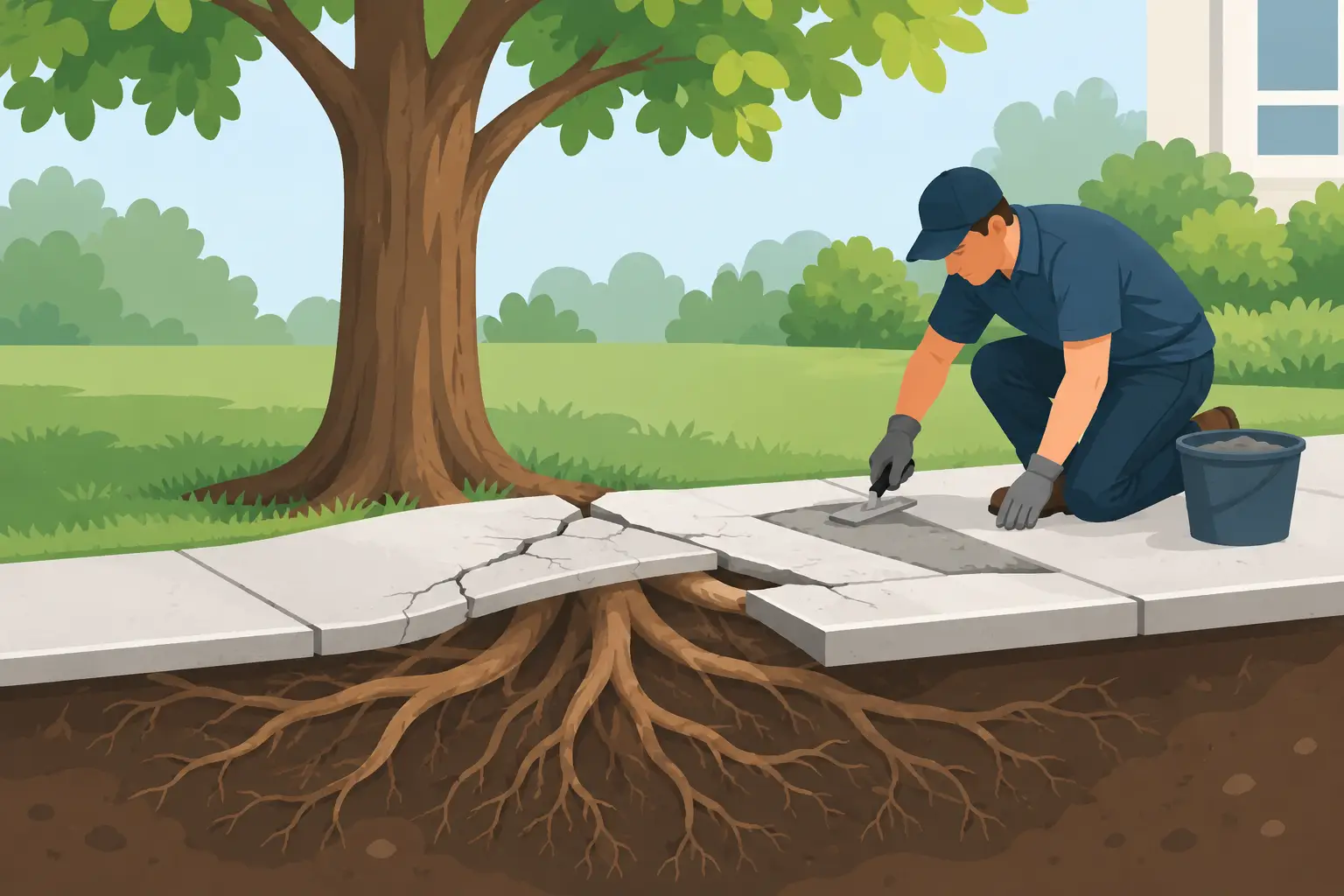
A sidewalk that has lifted an inch may not look urgent from the driveway. But sidewalk root damage can quickly turn into a trip hazard, a drainage problem, and an expensive repair if it is ignored. In Plymouth and across the West Metro, freeze-thaw cycles make uneven concrete worse, especially when water gets into cracks and settles beneath a slab.
The right fix is not always to cut roots and pour new concrete. Tree roots, soil conditions, sidewalk construction, and the tree’s overall health all matter. A practical repair plan protects people first while avoiding unnecessary damage to a mature tree.
What Sidewalk Root Damage Looks Like
Root-related sidewalk problems often start with a small change in elevation between two concrete panels. One slab may rise at the edge, tilt toward the home, or develop a crack that widens over time. You may also see exposed roots along the sidewalk, pooling water after rain, or a gap opening between the concrete and nearby lawn.
A raised slab is the most obvious warning sign, but it is not proof that a root alone caused the problem. Soil can settle, expand during winter, or wash away beneath concrete. In many cases, roots and soil movement work together. That distinction matters because the best repair for a settled slab is different from the best repair for a slab pushed upward by a large surface root.
Pay close attention when the uneven section is near a front walk, driveway, public sidewalk, entryway, mailbox, or commercial path. These are high-traffic areas where a minor height difference can create real liability exposure for a homeowner or property manager.
Why Roots Push Against Concrete
Tree roots usually grow near the surface, where oxygen, moisture, and nutrients are available. They do not normally seek out concrete to damage it. Instead, they follow favorable soil conditions and expand as the tree matures. If a sidewalk was installed close to a young tree, there may not have been enough space for the roots and hardscape to coexist long term.
Maples, cottonwoods, elms, willows, and other fast-growing or large-canopy trees can develop broad, strong root systems. Even a well-established oak can affect nearby concrete if it is planted too close. Older sidewalks may also be thinner, poorly supported, or built without enough base material, making them more likely to move.
Minnesota weather adds another layer to the problem. Water enters cracks, freezes, expands, and puts pressure on the concrete. Spring thaw can soften soil beneath the slab. What began as a small root-related lift can become a broken or unstable panel after a few seasons.
Assess the Tree Before Cutting Roots
The most common mistake is treating visible roots as disposable. Large roots close to the trunk provide structural support and move water and nutrients through the tree. Cutting them can weaken the tree, create decay, or make it more likely to fail in high wind.
Before any root pruning, look at the tree’s size, species, condition, and distance from the sidewalk. A small root several feet away from a healthy, established tree may be manageable. A root two to three inches thick near the trunk is a different situation. Removing a major structural root can cause more trouble than the sidewalk repair solves.
As a general rule, avoid removing large roots within the tree’s critical root area. That protected area varies by species and size, which is why a site-specific assessment is better than a one-size-fits-all answer. If the tree already has dead limbs, trunk decay, a lean, or storm damage, root cutting deserves even more caution.
There is also a timing issue. Root work during hot, dry weather can add stress to a tree. A qualified tree crew can help determine whether selective pruning is reasonable, whether the tree needs additional care, or whether removal is the safer long-term choice.
Repair Options for Sidewalk Root Damage
The right repair depends on the amount of lifting, the root location, the condition of the concrete, and how valuable the tree is to the property. In some cases, the best solution is a concrete repair with little or no root cutting. In others, the tree and sidewalk simply do not have enough room.
Lift and Relevel the Concrete
If a panel has settled or shifted but is otherwise in good condition, concrete lifting may restore a smoother walking surface. This approach can be less disruptive than full replacement. It works best when the underlying soil problem can be corrected and there is no large root continuing to force the slab upward.
Replace and Reroute a Sidewalk Section
When a tree is worth preserving, rerouting a short section of walk may provide the needed clearance. This option costs more than a basic patch, but it can reduce future root conflicts and retain a healthy shade tree. It is often worth considering around mature trees that add privacy, curb appeal, and cooling shade.
A replacement section can also be designed with more room between the concrete and the trunk. Depending on the location, a flexible joint or a wider planting strip may help accommodate future movement.
Grind or Replace a Raised Edge
For a minor elevation difference, grinding the higher edge can remove an immediate trip hazard. This is generally a short-term solution. It does not stop the root or soil movement underneath, and it may not be suitable for heavily cracked or badly tilted slabs. Still, it can be useful when a fast safety correction is needed while a larger repair is planned.
Selective Root Pruning
Selective pruning may be appropriate when one or two smaller roots are causing the issue and can be removed without compromising the tree. Roots should be cleanly cut, not torn out with equipment. The work should be planned around the tree’s health, not just the concrete schedule.
Root pruning is a trade-off. It may protect the sidewalk now, but the tree can respond by growing replacement roots or showing stress later. A root barrier may help guide new growth away from the walk, but barriers are not a guarantee and must be installed correctly.
Remove the Tree When the Risk Is Ongoing
Tree removal can be the practical answer when roots are repeatedly damaging a critical walkway, the tree is in poor condition, or preserving it would require cutting major structural roots. It is not the first choice for every raised slab, but it can prevent repeated concrete repairs and reduce the risk of future branch or tree failure.
When removal is needed, stump grinding helps clear the area for new landscaping or sidewalk work. A replacement tree can be planted farther from concrete, with its mature size in mind.
Avoid These Common Shortcuts
Do not cut large exposed roots with a saw just because they are visible. The tree may look fine for months, then decline or become less stable during a storm. Avoid piling soil over surface roots as well. Roots need oxygen, and added soil against the trunk and root flare can lead to decay.
It is also risky to pour a new slab directly over active roots without correcting the underlying conflict. The new concrete may look good at first, then lift or crack again. A repair should address drainage, base preparation, root clearance, and the future growth of the tree.
For public sidewalks, do not assume the repair is entirely up to the property owner. City rules, permits, and responsibility for sidewalk work vary by location. Check local requirements before removing concrete, rerouting a walk, or working near public right-of-way trees.
When to Call for Tree Help
Call for an assessment when a root has lifted concrete enough to create a clear walking hazard, when the root is large or close to the trunk, or when the tree shows signs of stress. Dead branches, mushrooms near the base, a new lean, cracks in the trunk, or storm damage can change the decision from a simple root issue to a safety concern.
For property managers, it is smart to document uneven walks as soon as they are noticed. Photos, measurements, and a prompt repair plan help protect tenants and visitors while preventing a small maintenance item from becoming an emergency.
A careful tree assessment before concrete work can save money and prevent unnecessary removal. Xtreme Tree Service MN can help evaluate whether selective pruning, removal, or another tree-focused solution makes sense before the sidewalk repair moves forward.
A lifted sidewalk rarely improves on its own. Address the hazard early, give the roots and concrete equal consideration, and choose a repair that will still make sense after the next Minnesota winter.