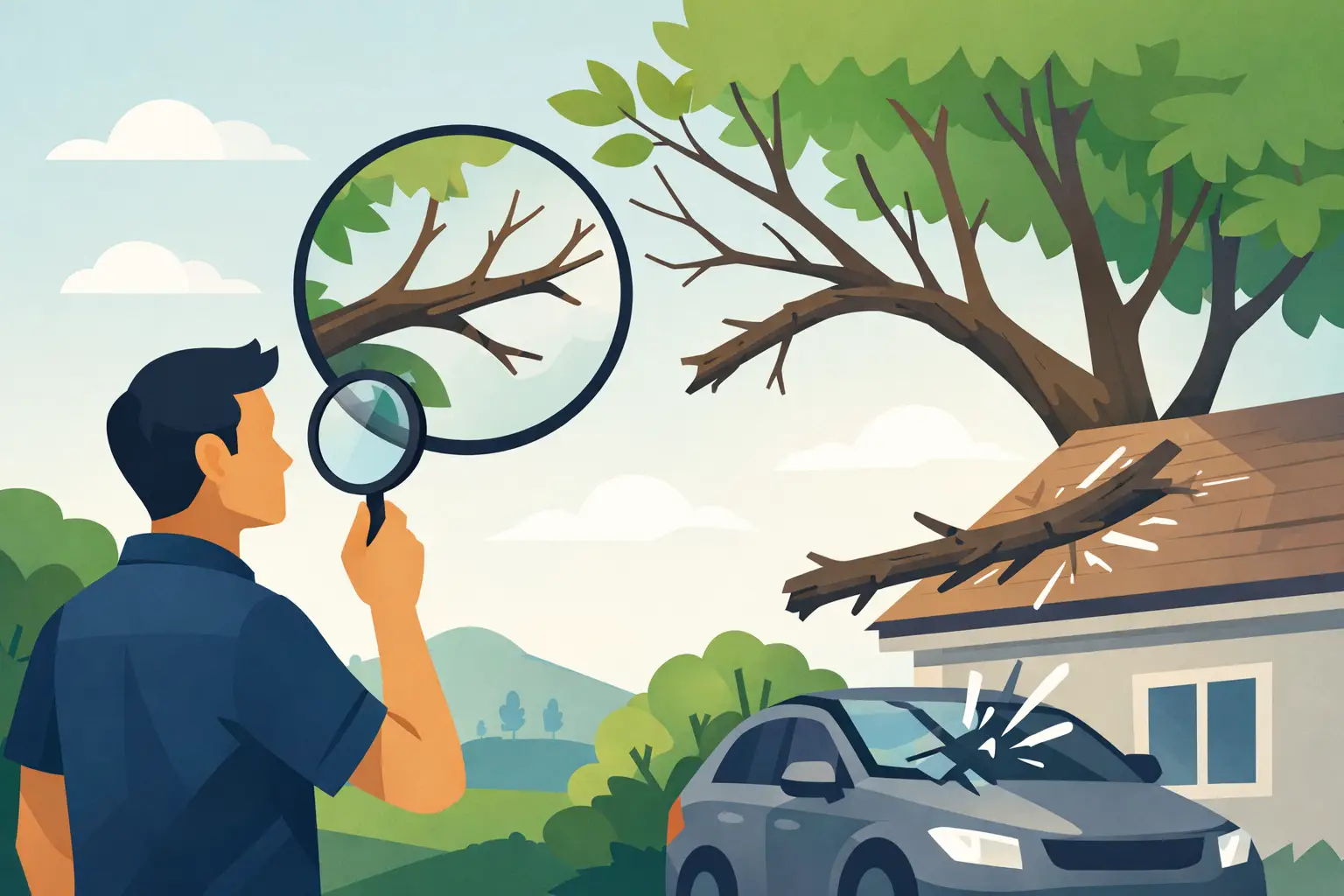
A dead branch can look harmless from the ground until a heavy, wet snowfall or a summer thunderstorm sends it onto a roof, vehicle, fence, or walkway. Knowing how to spot dead limbs gives homeowners and property managers a chance to address the problem before it becomes an emergency.
In Plymouth and across the West Metro, trees take a beating from wind, ice, snow load, drought, insects, and changing temperatures. A little routine checking can help you identify branches that need professional pruning or removal while the work can be planned safely.
How to Spot Dead Limbs From the Ground
Start by standing back far enough to see the full canopy. Look at the tree from more than one angle, especially after leaves have dropped in fall or before leaf-out in spring. Dead limbs often stand out because they do not match the color, shape, or density of the healthy parts of the tree.
A dead branch may have no leaves when the rest of the tree is fully leafed out. In winter, it may look unusually bare, brittle, or gray compared with surrounding branches. This is not always a final diagnosis, since some trees leaf out later than others and seasonal stress can affect growth. Still, a branch that remains bare while nearby branches are healthy deserves a closer look.
Watch for limbs that appear to be hanging lower than usual, drooping at an odd angle, or caught in other branches. A broken limb can remain lodged in the canopy for weeks or months. It may fall without warning when wind, snow, or another branch shifts it.
Check the Bark, Twigs, and Branch Structure
If the limb can be viewed safely from the ground, examine its bark. Dead wood commonly loses bark in patches, exposing smooth wood underneath. You may see peeling bark, deep cracks, or a branch that looks dry and weathered rather than firm and intact.
Small twigs provide useful clues. Healthy twigs are generally flexible and have visible buds during the dormant season. Dead twigs tend to snap easily, look shriveled, and have no live buds. Do not climb a ladder or into the tree to test them. A close look with binoculars is safer and often tells you what you need to know.
Fungal growth can also point to decay. Mushrooms or shelf-like fungi growing on a limb or near the branch connection may mean the wood is breaking down inside. Fungus does not automatically mean the entire tree is dead, but it does mean the structure should be evaluated. Internal decay can make a limb much weaker than it appears from the outside.
Use the Scratch Test Carefully
For low, small branches that you can reach from the ground, a simple scratch test can help. Lightly scrape a small spot of outer bark with a clean hand pruner or your fingernail. Live tissue beneath the bark is often green and slightly moist. Dead tissue is typically brown, dry, and brittle.
This test works best on smaller twigs and branches. It is not a reason to cut into large limbs or wound the trunk. Repeated scraping can damage healthy tissue, and a green layer in one area does not guarantee that the whole limb is sound. Treat it as one clue, not the only answer.
Know the Difference Between Dead, Dormant, and Damaged
Not every bare branch is dead. In early spring, some tree species are simply slower to leaf out. A branch may also be alive but stressed by drought, root damage, disease, or insect activity. It can have thin foliage, short new growth, or leaves that brown early.
Storm damage creates another gray area. A branch with torn bark or a split may still have live tissue, but its structural strength could be compromised. If a large limb has cracked at the trunk, has a deep split along its length, or is partly detached and hanging, treat it as a hazard whether it is technically alive or dead.
The practical question is not only, “Is this branch alive?” It is also, “Can this branch safely stay where it is?” A weakened limb over a driveway, patio, play area, sidewalk, roofline, or parking lot needs prompt attention.
Warning Signs That Call for Faster Action
Dead limbs are more urgent when their location creates a target beneath them. A small dead branch in an open back corner of the yard may be less pressing than a large limb over a front entry or a neighbor’s fence.
Call for an assessment sooner if you notice any of the following:
- A large branch hanging over a home, garage, deck, driveway, or commonly used walkway
- A cracked, split, or partly detached limb after wind, ice, or heavy snow
- Freshly broken wood or a limb caught high in the canopy
- Dead branches near power lines, service lines, or street traffic
- Decay, cavities, or fungus around the point where a major limb meets the trunk
- Multiple dead limbs throughout the canopy, especially on a mature tree
Branches near utility lines require extra caution. Do not attempt to trim them yourself or pull down a limb that is resting on a line. Keep people away from the area and contact the utility provider or a qualified tree crew that can determine the safest next step.
Why Dead Limbs Are Common After Minnesota Weather
Heavy snow and ice can overload branches, especially on spruce, pine, maple, and other trees with dense canopies. High winds can twist limbs at weak connections or expose internal decay that was not obvious before the storm. Summer storms often break branches that were already stressed by disease, insects, poor pruning, or old wounds.
Winter can hide problems. A limb may crack under ice but remain suspended until spring rain, wind, or leaf weight finishes the job. After a major storm, walk the property once conditions are safe. Look up from a distance, check trees near structures, and note any new lean, broken limbs, or debris in the canopy.
Do not stand beneath a damaged tree while inspecting it. If a branch is hanging overhead, keep children, pets, vehicles, and foot traffic out of that area until it can be addressed.
When Pruning Is Enough and When Removal Makes Sense
A single dead limb on an otherwise healthy tree can often be removed with proper pruning. The goal is to make a clean cut at the correct location without damaging the branch collar or taking more live canopy than necessary. Proper pruning helps reduce future breakage and keeps the tree looking balanced.
When dead limbs are widespread, the issue may be larger than one branch. A tree with extensive crown dieback, major trunk decay, a large cavity, or repeated limb failures may need a closer risk assessment. In some cases, selective trimming can extend the tree’s useful life. In others, removal is the safer choice, especially when the tree is close to a house, garage, road, or neighboring property.
There is no one-size-fits-all answer. Tree species, age, location, defects, and the targets below all matter. A healthy-looking tree can still have a hazardous limb, while an older tree with some deadwood may remain manageable with routine maintenance.
Avoid the DIY Risks
Small, reachable dead twigs can sometimes be handled with basic hand tools. Large limbs are different. Dead wood is unpredictable, lighter in some areas and heavier in others, and it can break before the cut is finished. A branch may swing, roll, strike a ladder, or pull down live limbs as it falls.
Avoid ladder work, especially when using saws. Do not cut branches that are overhead, under tension, near a structure, or close to power lines. The cost of professional help is usually far less than the cost of an injury, roof repair, or damaged landscaping.
A professional crew can evaluate the limb, plan a controlled removal path, protect nearby property, and haul away the debris. For urgent storm damage, fast action also helps prevent a partially broken limb from causing more damage during the next round of wind or rain.
Make Tree Checks Part of Property Maintenance
A quick seasonal inspection is a practical habit for homeowners and managers. Check trees after major storms, before winter snow arrives, and whenever you notice bare branches during the growing season. Pay extra attention to trees near homes, parking areas, sidewalks, playgrounds, and outdoor gathering spaces.
If something looks questionable, take a clear photo from the ground and arrange an estimate rather than guessing from below. Xtreme Tree Service MN can help identify dead or hazardous limbs and provide a clear plan for safe trimming, removal, and cleanup. Addressing one weak branch now can keep a routine tree job from becoming a rushed storm call later.