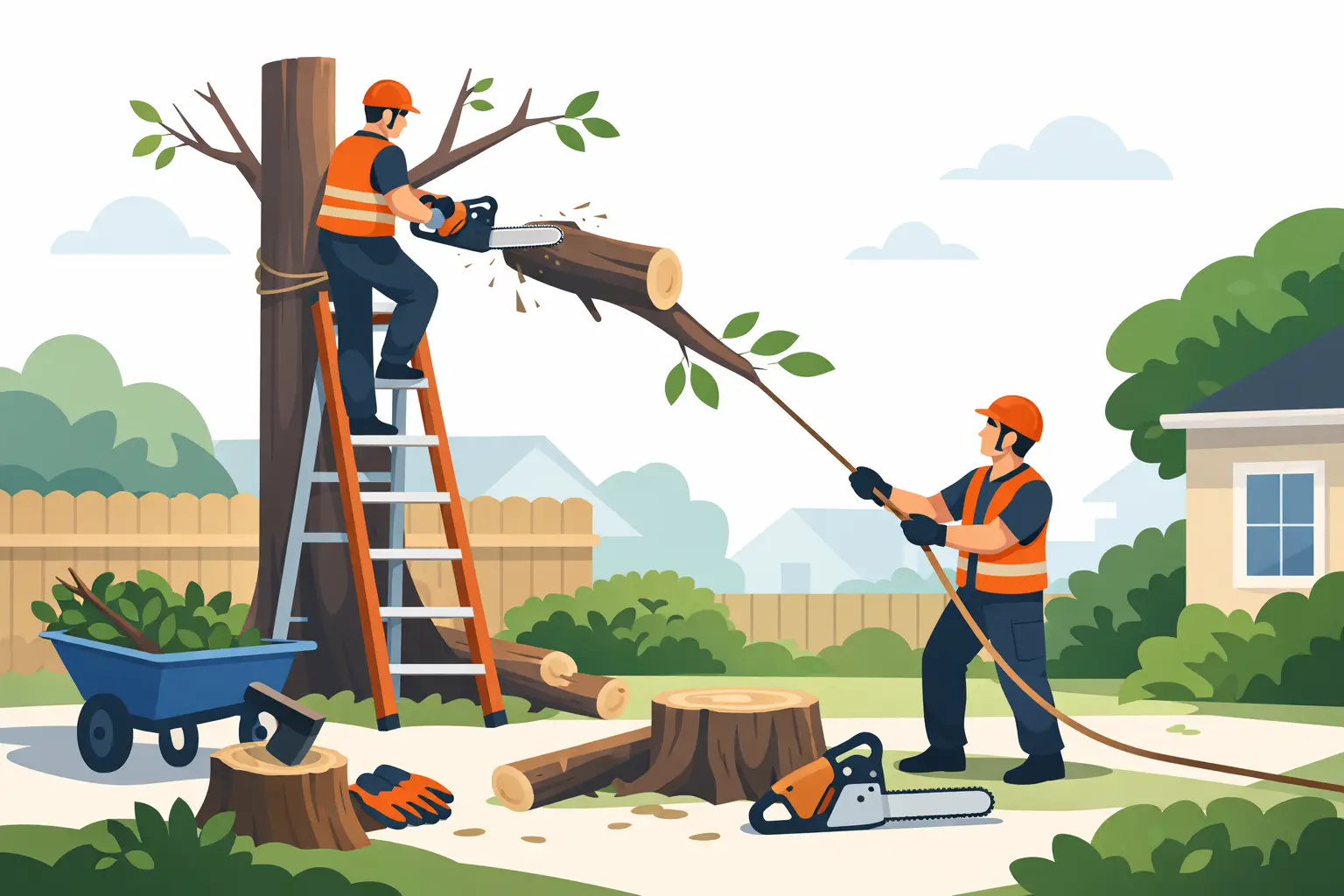
A tree can look manageable from the patio until you notice what surrounds it: a fence on one side, a roof on the other, utility lines overhead, and landscaping below. The work commonly described as removing trees from small backyard spaces is rarely just about cutting down a tree. It is about controlling every piece of the job from the first cut through final cleanup.
For homeowners and property managers in Plymouth, Minnetonka, Maple Grove, and nearby West Metro communities, tight access is one of the main factors that changes how tree removal is planned. A professional crew looks at the tree, the property, and the path in and out before equipment arrives.
Why Small Backyard Tree Removal Requires More Planning
In an open lot, a tree may be able to come down in one controlled direction. In a small backyard, that is often not an option. Nearby homes, garages, sheds, decks, fences, garden beds, playsets, and neighboring yards limit the available drop zone.
That does not mean the tree cannot be removed safely. It usually means it needs to be dismantled in sections. Crews may remove branches first, then lower larger wood pieces with ropes, and take down the trunk in smaller sections. This approach takes more time than simply felling a tree, but it helps protect the property around it.
The tree’s condition matters too. A healthy tree with a predictable structure may be easier to work with than a dead, split, leaning, or storm-damaged tree. Decay can make limbs and trunk sections less reliable, while a tree that has grown toward a house may require a more controlled rigging plan.
Start With a Clear Look at the Tree and Its Surroundings
Before scheduling removal, take note of what is close to the tree. This helps set realistic expectations for the estimate and the work itself. Photos can be useful, but an on-site assessment is often the best way to identify access limits and hazards.
Look at the tree’s height and lean, as well as the size of the trunk and major limbs. Check whether branches are touching a roof, hanging over a fence, or extending above a driveway. Also consider what sits below the canopy. A mature spruce over a backyard garden creates a different cleanup and protection plan than a smaller ornamental tree in an open lawn.
Access is just as important as tree size. Some backyards have a wide side gate that allows compact equipment through. Others only have narrow access between homes, which may require more climbing, hand carrying, and careful staging. A crew may need to protect turf, use plywood in high-traffic areas, or keep equipment in the driveway and move material out by hand.
Know When a Tree Should Come Down
Not every tree that drops leaves, looks uneven, or shades the yard needs removal. Pruning can often address crowded limbs, roof clearance, dead branches, and visibility issues. Removal becomes the better option when the tree presents a meaningful safety risk, has declined beyond recovery, or no longer fits the space.
Common reasons for removal include a dead or dying tree, visible trunk decay, major storm damage, root problems, severe leaning, or repeated branch failures. Trees growing too close to a foundation, garage, utility line, or neighboring structure may also become a concern as they mature.
There are trade-offs. Removing a healthy mature tree can change shade, privacy, drainage, and the appearance of a yard. If a tree is stable and the issue is limited to a few limbs, targeted pruning may preserve the benefits of the tree while reducing risk. A qualified tree professional can help separate a pruning issue from a removal issue.
Check Permits, Property Lines, and Utility Concerns
Rules can vary by city, neighborhood association, and property type. Before work begins, it is smart to check whether local permitting rules apply, particularly for larger trees, protected species, shoreline properties, or commercial and multi-unit sites. Property managers may also need approval from an owner or association before removal is scheduled.
Property lines deserve attention as well. A tree near a fence is not automatically shared, and a tree’s branches crossing into another yard do not necessarily determine ownership. If there is any question about where the trunk sits, confirm the boundary before work starts. A clear conversation with a neighbor can prevent frustration when crews need temporary access or when branches extend over adjoining property.
Overhead power lines require extra care. Do not assume a branch can be cut safely because it is only near a line. Electrical hazards can be serious, and work near energized lines may require coordination with the utility company. Never attempt DIY cutting around power lines.
Why DIY Is a Bigger Risk in a Tight Yard
Many homeowners are comfortable using a chainsaw for small firewood or storm cleanup. Removing a standing tree near structures is a different job. Even a relatively small tree can weigh far more than expected, and branches do not always fall where people think they will.
A small backyard gives you less room for error. There may be no safe path for a tree to fall in one piece. Cutting the wrong branch can shift the tree’s balance. Rotted wood can fail unexpectedly. A ladder and chainsaw are an especially risky combination when overhead branches are involved.
Professional tree crews use trained cutting methods, climbing gear, ropes, rigging systems, protective equipment, and equipment sized for the site. More importantly, they work from a plan. They decide how material will be removed, where it will be lowered, how the yard will be protected, and what happens if conditions change during the job.
What Affects the Cost of Removing a Tree From a Small Backyard?
Tree removal estimates are based on the work required, not just the number of trees. A small tree in an accessible side yard may be straightforward. A similarly sized tree behind a house with no equipment access, heavy limb spread, and a deck beneath it can require substantially more labor.
The biggest factors usually include tree height, trunk diameter, health and stability, distance from structures, available access, and the amount of material that must be hauled away. Emergency work after a storm can also cost more because the tree may be under tension, resting on a structure, or blocking access.
Stump grinding is generally a separate decision. Removing the tree solves the overhead hazard, but the stump remains in the ground. Grinding it can improve the appearance of the yard, make mowing easier, and free up space for grass or new landscaping. If you plan to plant another tree in the same area, discuss placement first. Old roots and grindings can affect the new planting location.
Prepare the Yard Before the Crew Arrives
A little preparation helps the job move safely and efficiently. Move vehicles from the driveway if wood and equipment will need to pass through. Clear patio furniture, grills, toys, potted plants, and other movable items from the work area. Let the crew know about irrigation heads, invisible pet fences, septic components, or landscape lighting that may not be easy to see.
Keep children and pets indoors during the work. Tree removal involves falling material, moving equipment, and active cutting zones. Even with a careful crew, this is not a job to watch from the edge of the yard.
Ask in advance how wood, brush, and debris will be handled. Some homeowners want logs left for firewood, while others want everything hauled away. Confirming that detail before work begins avoids confusion and helps ensure the finished yard looks the way you expect.
Cleanup Is Part of a Complete Job
A removed tree should not leave behind a backyard full of branches, sawdust piles, and ruts without a conversation. The exact cleanup level depends on the project and site conditions, but the expectation should be clear before the first cut.
A professional crew should remove agreed-upon brush and wood, rake up routine debris, and take reasonable steps to protect lawns and landscaping. Some impact is possible when large trees are removed, especially after rain or during soft-ground conditions. Good communication matters here. Homeowners should know where equipment will travel and what protection measures are practical for their yard.
For a tight property, the best removal plan is the one that protects what stays behind. Xtreme Tree Service MN focuses on safe removal, clear communication, and thorough cleanup so homeowners can deal with the tree problem without creating a new one.
If a tree is crowded into a small backyard, do not wait until a storm turns a manageable project into an emergency. A careful on-site estimate can show what is involved, what needs protection, and the safest path to getting your yard back to usable space.