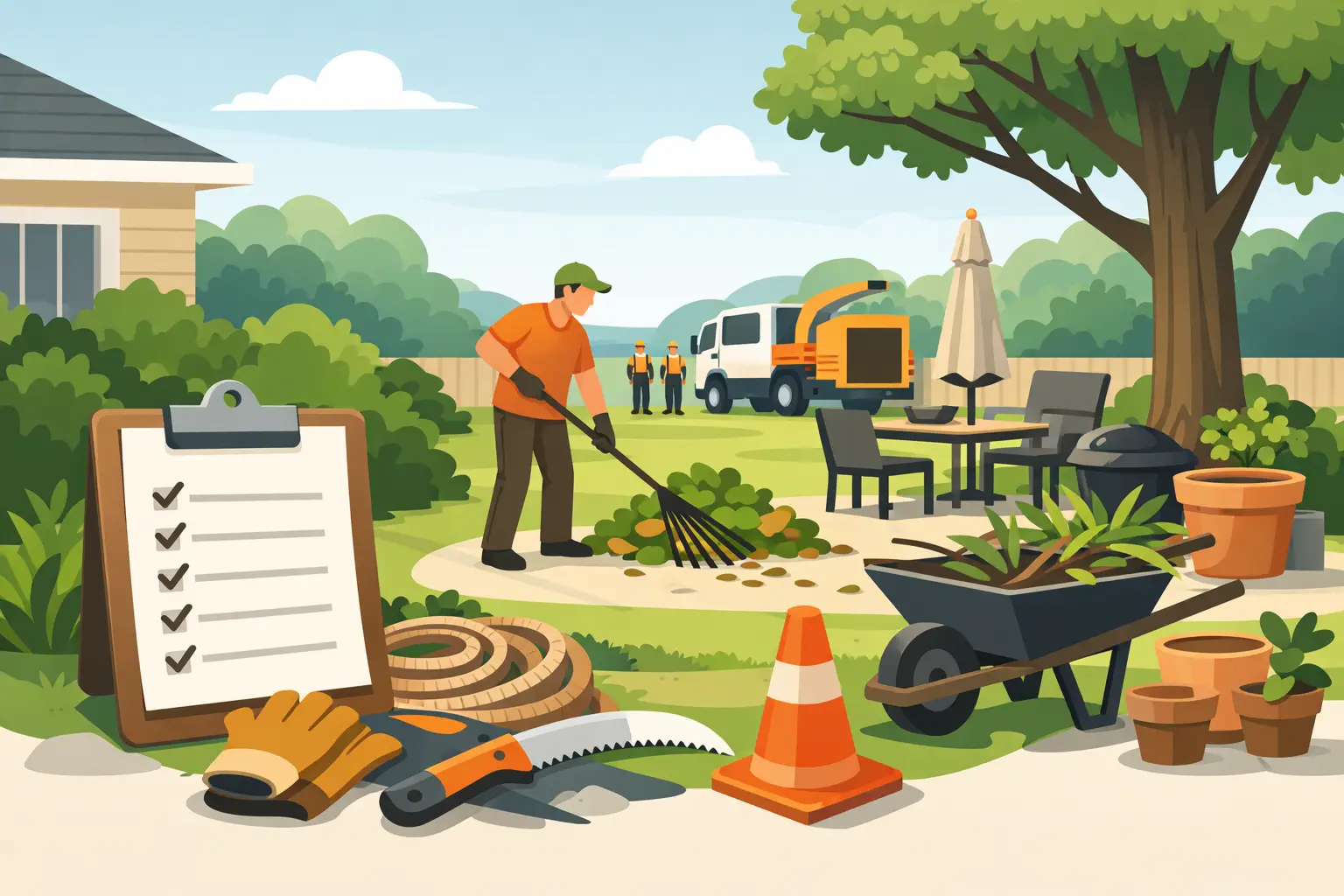
A tree crew can do its best work when it can get to the tree, set up safely, and keep the job moving. Knowing how to prepare for tree work ahead of time helps protect your property, prevents avoidable delays, and gives the crew room to focus on safe removal, trimming, or storm cleanup.
For homeowners and property managers in Plymouth, Minnetonka, Maple Grove, and the West Metro, preparation usually comes down to access, communication, and clearing the work area. You do not need to take on risky tasks yourself. A few practical steps before the crew arrives can make a real difference.
Confirm the Scope Before Work Day
Before the scheduled date, make sure everyone is clear on what is being done. Walk the property with the estimator if possible and confirm which trees, branches, stumps, or debris piles are included. If multiple trees are close together, identify the specific tree with a ribbon, marker, or a clear description so there is no confusion.
This is also the time to point out details that may not be obvious from the street. Let the crew know about septic systems, irrigation heads, invisible dog fences, landscape lighting, shallow utility lines, soft ground, retaining walls, or areas where equipment should not travel. A professional crew plans for these conditions, but clear information from the property owner helps prevent surprises.
If your project involves stump grinding, ask where the grindings will go and what depth is expected. If a tree is being removed near a fence, shed, roofline, or power line, discuss the planned access route and any limits on where equipment can be placed. The right approach depends on the tree, the yard layout, and the condition of the ground.
Make a Clear Route for the Crew and Equipment
Tree work often requires trucks, trailers, chippers, loaders, or stump grinders. A tight driveway, blocked gate, or cars parked near the work zone can slow setup and create unnecessary risk.
Move personal vehicles out of the driveway and away from the street in front of the property if the crew will need that space. In many cases, parking on the opposite side of the street or farther down the block gives the crew a safer area to stage trucks and equipment. If you share a driveway or access lane with a neighbor, let them know about the work in advance.
Open gates and remove locks if the work area is in a fenced backyard. Check that gates are wide enough for the expected equipment, and let the crew know if there are low branches, narrow turns, or steps that affect access. Do not assume a crew can get a stump grinder through a standard side gate without checking first.
Keep sidewalks, driveways, and access paths free of trash bins, toys, planters, hoses, basketball hoops, and other loose items. A clear route helps the crew work efficiently and reduces the chance that something gets damaged while material is being moved.
Protect the Areas That Matter Most
Tree crews take care around homes, landscaping, and nearby structures, but it is still smart to move portable and fragile items before work begins. Think about what is beneath the tree and what sits along the route where branches and equipment will travel.
Move patio furniture, grills, fire pits, potted plants, lawn decorations, bird feeders, play equipment, and outdoor storage items away from the work area. If you have a trampoline, yard games, or a portable sports net, take them down or move them if possible. Covering an item may help with dust, but moving it completely out of the area is usually better.
Close windows near the work zone and move vehicles away from any tree being trimmed or removed. If branches will be lowered near a deck, pool, garden, or landscaping bed, ask the crew what should be moved before they arrive. Some landscaping cannot be moved, and that is fine. The crew can plan around it when they know it is there.
For stump grinding, remove rocks, edging, loose bricks, metal stakes, and decorative material from around the stump. These objects can damage equipment or become projectiles. Leave any roots, buried obstacles, or suspected utility concerns to the professionals rather than digging around the stump yourself.
Keep Children and Pets Away From the Work Zone
Tree work involves moving equipment, falling limbs, ropes, chainsaws, wood chips, and heavy loads. It is not a safe area for children, pets, visitors, or curious neighbors.
Plan to keep dogs and other pets indoors, in a secure part of the home, or away from the property while work is underway. Even calm pets can become stressed by saw noise and equipment. If your pet needs a yard break during the day, check with the crew first so you can use a safe area away from the job site.
Children should stay inside or be supervised well away from the crew. Remind them not to approach trucks, ask workers questions while they are operating equipment, or walk through the work area to get to a friend’s house. A few minutes of waiting is much safer than trying to cross an active tree work zone.
If a neighbor’s children, pets, fence, or parked vehicle may be close to the work area, give that neighbor a heads-up. This is especially helpful for removals near property lines and for jobs where a chipper or truck will be staged on the street.
Plan for Utilities, Sprinklers, and Overhead Hazards
Overhead utility lines require special attention. Never attempt to cut, pull, or move branches near electrical lines on your own. Tell the tree company about any overhead lines, service drops to your home, cable lines, or communication lines that run through or near the tree canopy.
Underground systems matter too. If the work may involve stump grinding, equipment travel, or digging, identify sprinkler heads, valve boxes, septic components, drainage lines, and underground pet fences. Property owners may need to arrange utility locating when required for the work being performed. The crew can explain what information is needed based on your project.
After a storm, treat downed or hanging wires as dangerous. Keep people away, do not touch branches that may be in contact with lines, and contact the utility provider if there is an immediate electrical hazard. Emergency tree work can address damaged trees, but electrical hazards must be handled with the right coordination.
Expect Noise, Dust, and a Temporary Change to Your Routine
Tree work is loud. Chippers, saws, loaders, and stump grinders can be disruptive for several hours, depending on the size of the project. If you work from home, have a baby sleeping, or need a quiet environment for a meeting, plan accordingly.
Close windows near the work area to reduce noise and dust. If wood chips or sawdust are a concern around a pool, open patio, or neighboring property, discuss that before the job begins. Crews can take reasonable precautions, but no outdoor tree project is completely dust-free.
You may also need to avoid using your driveway or garage for part of the day. Ask about the expected arrival window and whether your vehicle will be blocked during the job. If you need to leave at a specific time, communicate that before work starts rather than trying to move through an active work area.
Be Available for Questions, Then Give the Crew Space
You do not need to stand outside all day, but someone should be reachable by phone when the crew arrives. A quick walkthrough at the start can confirm the scope, access route, and any property concerns. After that, letting the crew work without interruption is usually the safest option.
Let them know the best way to contact you if a decision comes up, such as an unexpected cavity in a tree, hidden damage, a change in access, or a branch that needs a different removal method. Good communication prevents small field decisions from becoming frustrations later.
Before the crew leaves, take a final look at the property together when possible. Confirm that the agreed debris has been removed, gates are closed, and the work area is cleaned up. If stump grindings, logs, or firewood are staying on site, make sure the final placement matches the plan.
A Safer Start Makes for a Better Finish
Preparing for tree work is not about doing the crew’s job. It is about making the property ready for safe access and clear communication. Move what you can, keep people and pets out of the area, flag anything the crew needs to know, and ask questions before equipment is running.
Xtreme Tree Service MN can help you understand what to expect before removal, pruning, stump grinding, or storm cleanup begins. A short conversation before work day can protect your property and help the job finish cleanly.