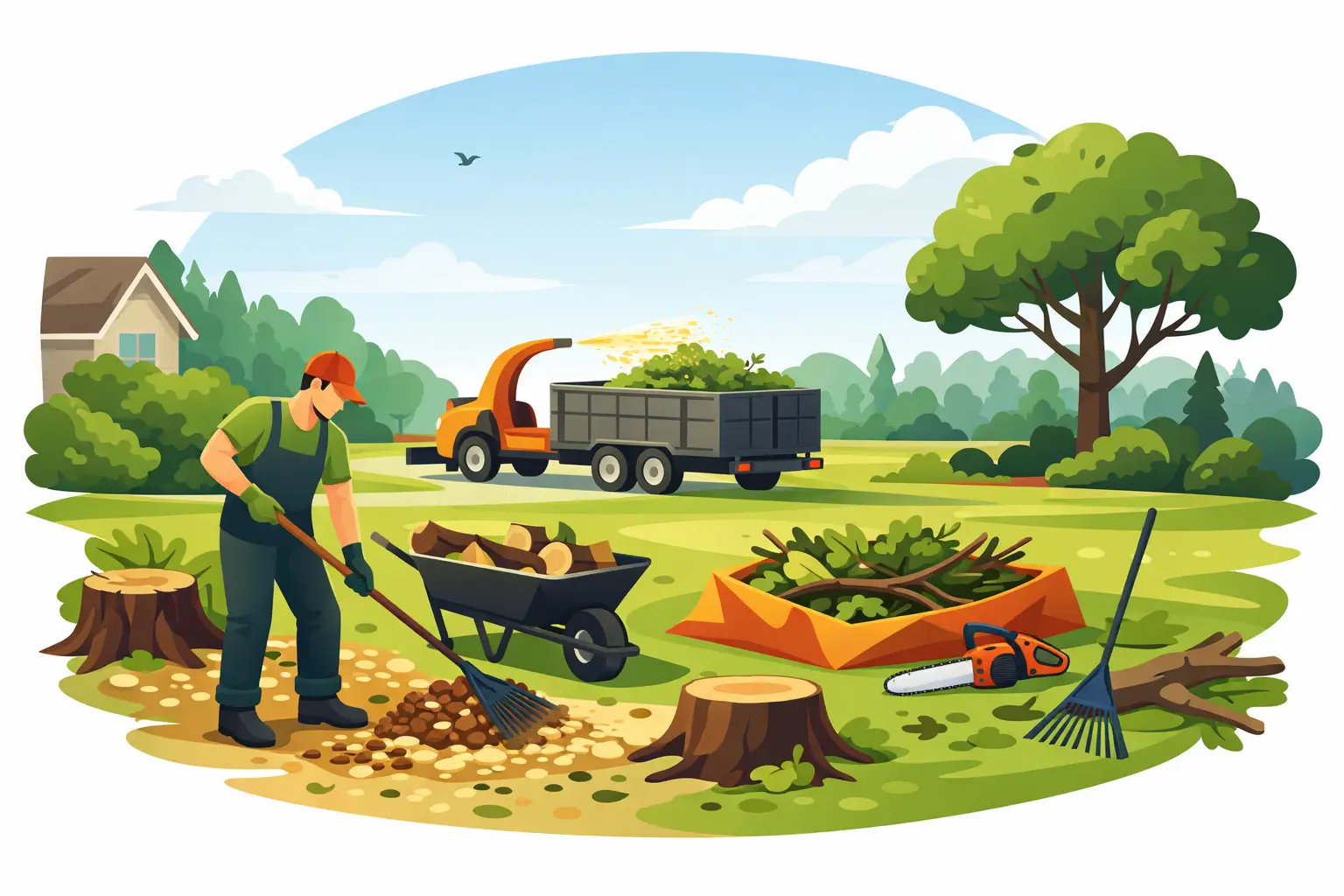
A tree comes down fast. What homeowners notice next is the mess left behind – chips in the grass, sawdust in the mulch, small limbs near the fence, and heavy ruts where equipment crossed the yard. That is why yard cleanup after tree removal matters almost as much as the removal itself. If the cleanup is rushed, your property can look half-finished even when the tree is gone.
For homeowners and property managers in Plymouth and the West Metro, cleanup is not just about appearance. It affects safety, lawn recovery, drainage, curb appeal, and how quickly the space can be used again. A good crew plans for cleanup before the first cut is made, not after the work is already done.
What yard cleanup after tree removal should include
A proper cleanup starts with the obvious material – logs, branches, brush, and loose debris. But a clean job site goes further than stacking wood neatly or running a rake across the lawn. Small pieces of branch litter, bark strips, and sawdust can spread farther than most people expect, especially if the tree was large or taken down in sections.
The work area should also be checked for debris in planting beds, around air conditioning units, along fences, and near sidewalks or driveways. If the crew used rigging or brought branches over structures, cleanup needs to include those perimeter areas too. On many jobs, the details are what separate a professional finish from a quick haul-away.
If stump grinding is part of the project, that creates another layer of cleanup. Grinding produces a mound of chips and mixed soil, and homeowners should know ahead of time whether that material is being left on site, spread out, or removed. None of those options is wrong by itself. What matters is clear expectations before the job starts.
Why cleanup quality matters more than most people think
A few stray chips may not seem like a big deal, but leftover debris can create problems. Sharp wood fragments can be a hazard for kids, pets, and lawn equipment. Fine debris can smother grass in spots or end up tracked into the house and garage. Piles left near the foundation or fence line can also hold moisture where you do not want it.
There is also the issue of hidden damage. After a removal, cleanup is the right time to spot torn turf, compacted soil, scraped hardscape, or broken landscape edging. If nobody is paying attention at the end of the job, these issues can sit unnoticed until the next mowing or rainstorm.
For property managers, cleanup is also part of liability control. A branch stub left near a walkway, a rut in a common lawn area, or wood chips scattered across a parking edge can turn into a complaint fast. Clean work reduces callbacks and makes the property presentable right away.
The biggest cleanup issues happen before removal starts
Most cleanup problems are not caused by laziness at the end of the job. They start with poor planning. If there is no clear access route for equipment, crews may end up crossing soft lawn unnecessarily. If drop zones are not defined, brush can be dragged through planting beds or over decorative stone. If surface protection is not considered, tire marks and rutting become more likely, especially after rain.
This is where experience shows. Safe removal and good cleanup go together. The crew should think through where material will land, how it will be staged, where trucks and trailers will sit, and how the yard will be protected during the process. That is especially important in suburban neighborhoods with tight lot lines, irrigated lawns, patios, fences, and nearby structures.
Equipment marks, ruts, and lawn recovery
One of the most common concerns after tree work is damage to the yard itself. Even careful crews may leave some impact when removing a large tree, particularly if the ground is soft or access is limited. The honest answer is that it depends on the weather, tree size, and the amount of equipment needed.
What matters is how that impact is managed. In some cases, light tire impressions will settle with time and normal watering. In others, ruts need to be leveled and repaired. Homeowners should ask what level of lawn touch-up is included and what is outside the scope. Cleanup does not always mean full landscape restoration, but it should mean the site is left orderly, safe, and clearly explained.
If your yard has irrigation, pavers, retaining walls, or newer sod, mention it before work begins. That helps the crew choose the best access path and avoid surprises.
Stump grinding changes the cleanup plan
When the tree is removed but the stump stays, the site can still feel unfinished. Once stump grinding is added, cleanup becomes a little more technical. The grindings are bulky, and the area may settle over time because the stump and root flare were occupying space below grade.
Some homeowners want the chips left for fill. Others want them hauled away so the area can be seeded or prepared for planting. There is no one answer for every property. If you plan to grow grass there, excess chips usually need to be addressed so the soil surface can be rebuilt properly. If the area will be mulched or replanted later, leaving some material may make sense.
This is where direct communication helps. A straightforward estimate should spell out whether stump grindings and excess debris are included in hauling, and whether topsoil or seed is part of the work.
What homeowners should ask before the job
A good estimate is not just about the removal price. It should make cleanup expectations clear. Ask whether all brush and wood will be hauled away, whether the site will be raked or blown clean, whether stump debris is included, and whether surface protection will be used if equipment needs to cross the lawn.
It is also smart to ask what happens if weather changes site conditions. A dry yard in the estimate can become a soft yard on work day after overnight rain. A reliable company will talk through options instead of forcing equipment across saturated ground just to keep the schedule moving.
For larger jobs, ask where trucks will park and how access will work around fences, gates, and neighboring properties. Cleanup starts with setup.
Yard cleanup after tree removal in tight residential spaces
In neighborhoods around Plymouth, Minnetonka, and Maple Grove, tree work often happens in close quarters. Homes sit near fences, garages, decks, and mature landscaping. That means yard cleanup after tree removal has to be more controlled than it would be on an open lot.
Branches may need to be lowered instead of dropped. Brush may need to be staged in smaller piles to keep driveways and sidewalks clear. Fine cleanup usually takes longer in these spaces because debris travels into corners, beds, and along structure lines. It is slower work, but it protects the property and leaves a better result.
That is one reason many homeowners prefer a crew that handles removal, hauling, and cleanup as one complete job. When the same team owns the full process, there is less finger-pointing and fewer loose ends at the end of the day.
When a cheap quote gets expensive
Cleanup is one of the easiest parts of tree work to underbid and one of the easiest for customers to assume is included. That gap causes frustration. A low quote may cover dropping the tree and hauling the main wood, but not the detailed cleanup around the yard, not the stump debris, and not the turf touch-up where equipment traveled.
That does not always mean the company is being dishonest. Sometimes it means the scope was never clearly defined. Still, if the site looks rough after the work, the lower price stops looking like a bargain.
A dependable crew is clear about what clean means. For companies like Xtreme Tree Service MN, that follow-through is part of the job, not an afterthought.
A clean site should feel finished
When the removal is done right, you should not be left wondering what happens to the brush pile, whether the sawdust gets addressed, or who is fixing the mess by the gate. The tree may be the main problem, but the condition of the yard is what you live with afterward.
A good cleanup leaves the property safe, usable, and close to normal again. That is the standard worth asking for before any tree comes down.