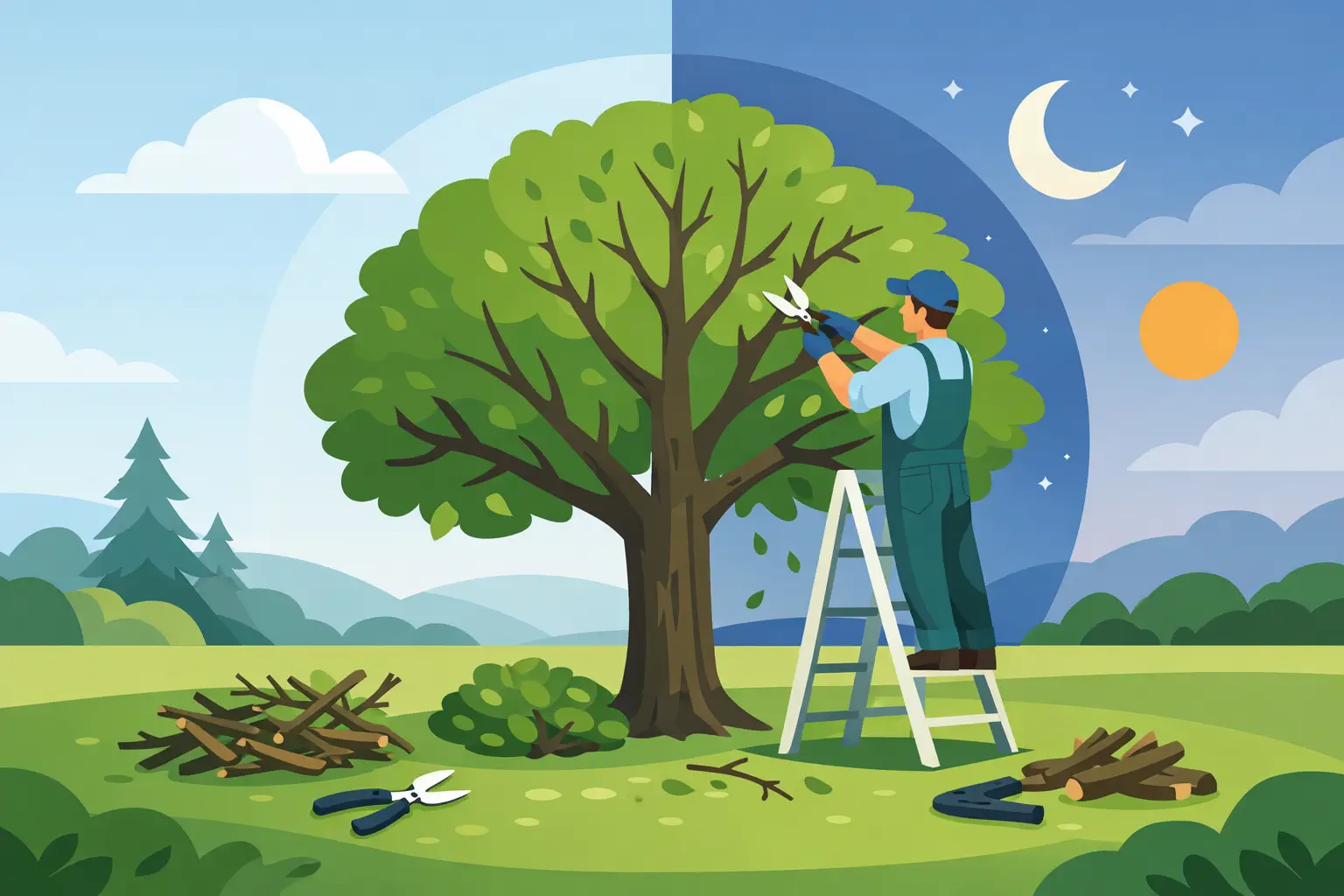
A tree can look fine from the driveway and still have limbs rubbing, deadwood up high, or growth pushing toward the roof. That is why homeowners often ask when should trees be pruned. The short answer is late winter is often best, but the right timing depends on the tree, the goal, and whether there is a safety issue that should not wait.
When should trees be pruned for best results?
For many shade trees in Minnesota, the best time to prune is during dormancy, usually from late winter into very early spring before new growth starts. At that point, the branch structure is easier to see, cuts are less stressful on the tree, and many pests and diseases are less active. If the goal is to improve shape, remove weak limbs, or reduce risk before spring storms, dormant-season pruning is usually the cleanest window.
That said, there is no one date that works for every property. Oaks, maples, fruit trees, ornamentals, and storm-damaged trees all follow different rules. Good pruning is not just about the calendar. It is about tree species, tree health, and what problem you are trying to solve.
Why timing matters
Pruning at the right time helps the tree seal over cuts, direct energy where it is needed, and avoid unnecessary stress. Pruning at the wrong time can leave a tree more vulnerable to disease, excessive sap flow, weak regrowth, or slow recovery.
For property owners, timing also matters for practical reasons. A heavy limb over a driveway is not just a tree health issue. It is a liability issue. Branches hanging over a roof, blocking sightlines, scraping siding, or cracking in a storm are often better handled sooner rather than waiting for the perfect season.
That is the trade-off most people need to understand. Ideal pruning timing matters, but safety comes first.
The best season for common pruning work
Late winter is the go-to season for structural pruning on many deciduous trees. Without leaves in the way, it is easier to spot crossing branches, deadwood, and poor limb spacing. Trees are also not putting energy into active growth, so they generally handle corrective pruning well.
Spring can still work, especially for light pruning or cleanup after winter damage. But some species, like maples and birches, may bleed sap if pruned in early spring. That usually looks alarming to homeowners, but it is not always harmful. It is more of a nuisance than a serious problem in many cases.
Summer pruning can be useful when the goal is size control, clearance, or removing damaged limbs after storms. It can also help slow aggressive growth on certain trees. The downside is that summer cuts can put more stress on a tree during heat and dry conditions, especially if too much canopy is removed at once.
Fall is usually the least preferred time for major pruning. Trees are slowing down, healing is slower, and in some cases disease pressure can be a concern. If a branch is dead, broken, or hazardous, it should still be addressed. But for non-urgent corrective work, waiting until dormancy is often the better move.
When should trees be pruned in Minnesota?
In Plymouth and across the West Metro, weather adds another layer to timing. Snow load, ice, and spring storms all expose weak branches. That makes late winter pruning especially practical here. Crews can identify defects before leaves return, and homeowners can reduce storm risk before the growing season gets going.
Minnesota also has a strong oak population, and oak pruning deserves extra caution. Oaks should generally not be pruned during higher-risk periods for oak wilt transmission. If you have an oak with a damaged or hazardous limb, the work may still need to happen, but timing and proper handling matter more than usual.
This is one reason broad advice can only go so far. Local conditions, species, and current tree health all affect the answer.
Signs a tree should be pruned now, not later
Some jobs should not sit on a to-do list until the ideal season. If a limb is cracked, hanging, split from the trunk, or already contacting a structure, it needs attention. The same goes for dead branches over play areas, driveways, sidewalks, or parking spaces.
There are also less obvious signs. Branches rubbing against each other create wounds. Dense interior growth can reduce airflow and lead to weak structure. Low limbs can obstruct mowing, walkways, or visibility at exits. If a tree is growing into utility lines, that is not a wait-and-see issue.
A healthy-looking tree can still be poorly structured. Co-dominant stems, long overextended limbs, and old stubs from bad cuts can all become failure points later. Pruning before failure is usually less expensive and far less disruptive than emergency cleanup after a storm.
Different trees, different pruning windows
Not every tree on a property should be treated the same way. Shade trees such as maple, ash, elm, and linden often do well with dormant-season pruning. Ornamental trees may need a lighter hand and more attention to bloom cycles.
Spring-flowering trees are a good example. If they bloom on old wood, pruning in late winter may remove this year’s flowers. If appearance matters, it often makes sense to prune them shortly after flowering instead. That is not a health issue so much as a timing choice based on what the owner wants from the tree.
Fruit trees are another category where regular pruning is useful, but technique matters. The goal is often a mix of structure, sunlight penetration, and manageable growth. Poor cuts can do more harm than good, especially if too much is removed in one season.
Evergreens also have their own limits. Light shaping and removal of dead branches can be done, but hard cuts into older wood may not fill back in. Timing and species both matter.
What good pruning should and should not do
Good pruning improves structure, clearance, and safety without stripping the tree. It should leave the tree looking natural, not hacked back or thinned into a weak framework. Cuts should be made with a purpose and in the right location, not randomly throughout the canopy.
A common mistake is assuming more pruning is better. It is not. Over-pruning can trigger stress, suckering, sunscald, and fast weak regrowth. Topping is another major problem. It may reduce height quickly, but it creates poor structure and future hazards.
A properly pruned tree should have better balance, fewer defect points, and room to grow without interfering with the house, garage, driveway, or neighboring trees.
DIY pruning versus calling a professional
Homeowners can often handle small, low branches on young trees if they use clean tools and avoid over-cutting. But once ladders, larger limbs, or branch weight enter the picture, the risk changes fast. Tree work near roofs, fences, windows, or tight backyard spaces is where mistakes get expensive.
There is also the issue of knowing what to cut and what to leave. Removing the wrong scaffold limb can change the structure of the whole tree. Cutting too close to the trunk or leaving long stubs affects healing. And with storm-damaged trees, tension in the wood can make a branch shift suddenly when cut.
For homeowners and property managers, professional pruning is often less about convenience and more about risk control. Safe execution, property protection, and full cleanup matter just as much as the cut itself.
A practical way to decide
If the tree has dead, damaged, or dangerous limbs, prune as soon as conditions allow safe work. If the tree is healthy and the goal is routine maintenance, late winter is usually the best starting point. If it is an oak, a flowering ornamental, or a tree with a species-specific concern, get the timing checked before cutting.
That approach keeps the decision simple. Safety first. Tree health second. Appearance and shaping after that.
For many properties, the right pruning schedule is not every year and not never. It is periodic maintenance based on growth rate, location, and exposure to storms. A mature tree over a house deserves more attention than a young tree in open lawn. A rental property with parking access and foot traffic may need a more proactive plan than a backyard tree with plenty of space.
If you are unsure when a tree should be pruned, it usually helps to have it looked at before it becomes urgent. A straightforward estimate and a clear recommendation can save you from guessing, and from dealing with a broken limb when the weather turns.