That old stump in the yard usually starts as a minor annoyance. Then it gets in the way of mowing, attracts attention for the wrong reasons, or becomes one more thing you have to work around every season. A professional stump grinding service solves that problem without tearing up the whole yard, and for many homeowners in Plymouth and the West Metro, that is the most practical next step after tree removal.
Stump removal is one of those jobs that looks simple from a distance. In reality, it takes the right equipment, a careful approach, and a crew that knows how to work around lawns, landscaping, utilities, and nearby structures. If the goal is to get the stump down below grade, leave the area clean, and avoid unnecessary damage, the process matters.
Why homeowners book a stump grinding service
Most people do not call about a stump because they like how it looks. They call because it creates a real problem. Sometimes it is right in the middle of the lawn where it breaks up usable space. Sometimes it sits near a driveway, patio, fence line, or garden bed and makes the property feel unfinished.
There are safety concerns too. Stumps can become tripping hazards, especially for kids, guests, tenants, or anyone maintaining the property. They also make mowing and trimming harder than it needs to be. If you manage more than one property, that extra obstacle adds up quickly in labor and upkeep.
In some cases, the stump is also starting to decay. That can attract insects, encourage fungal growth, and lead to small shoots popping up around the base. Not every old stump creates those issues right away, but many do over time. Grinding it down is usually the cleanest fix.
What stump grinding actually does
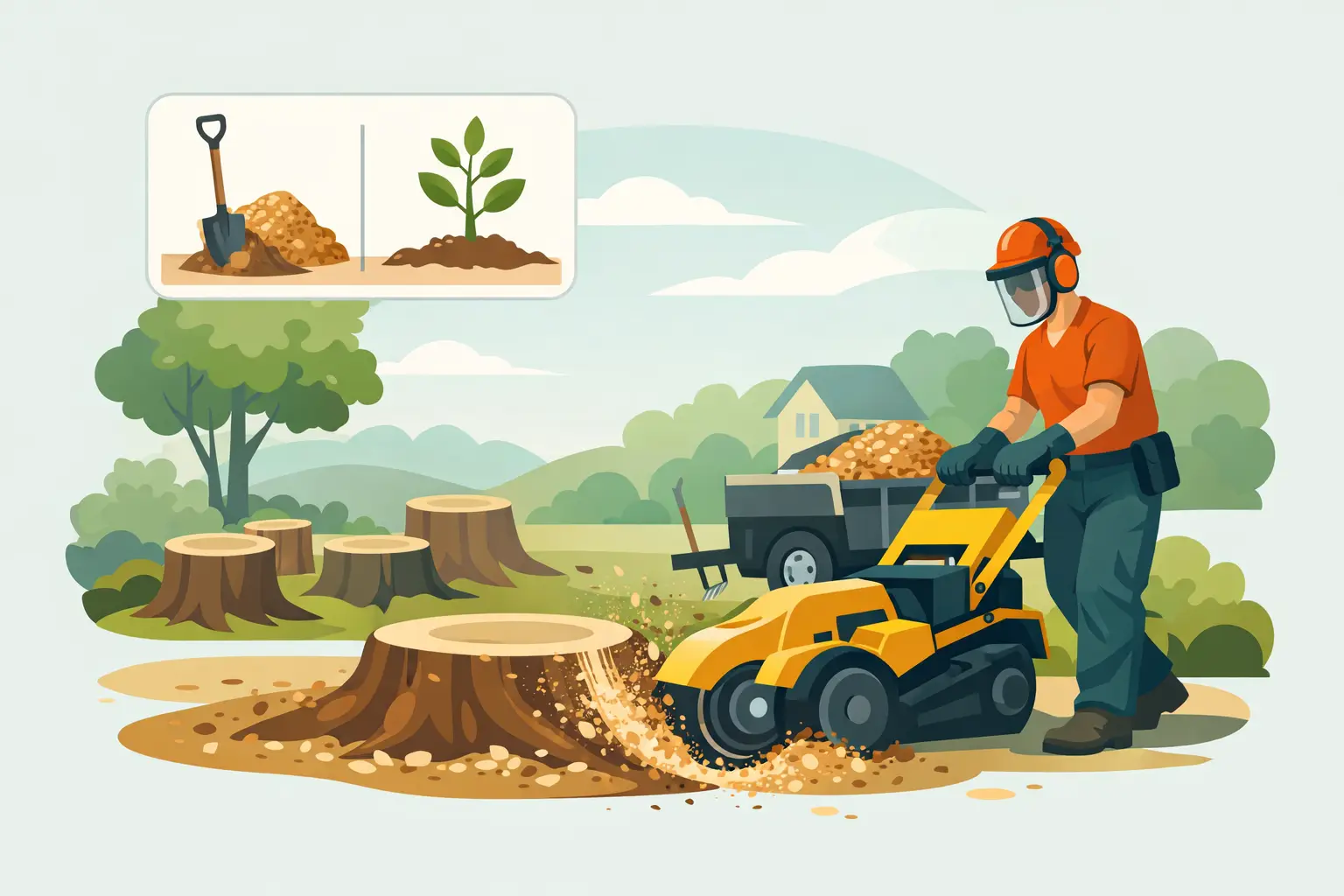
A stump grinding service uses a specialized machine to grind the stump down below ground level. Instead of pulling the entire root system out, which can be much more disruptive, the machine chips away the wood until the visible stump is gone and the area can be leveled out.
That difference matters. Full root excavation is sometimes necessary, but it is usually more invasive and harder on the surrounding yard. Grinding is often the better fit for residential properties because it removes the part you see and use every day without creating a much larger repair project.
How deep the stump is ground depends on the site and what the area will be used for afterward. If you want grass over it, the grinding depth and cleanup should support that plan. If the stump sits in a planting bed or along a wooded edge, the finish may look a little different. This is one of those areas where a clear conversation before work starts saves frustration later.
What to expect on the day of service
A good stump grinding job starts before the machine is unloaded. The crew should look at access, check the work area, and consider what needs protection. That includes nearby landscaping, edging, fences, siding, and other features that can be affected if the site is tight.
The actual grinding process is efficient, but it is not careless work. The machine works the stump down in passes, breaking it into wood chips and grinding below the surface. Depending on the stump size, wood type, and location, the job can move quickly or take more time than a homeowner expects.
Cleanup is a big part of the service. The difference between an average job and a professional one often shows up after the grinding is done. A clean site, managed debris, and a clear explanation of what remains in the area are all part of doing the work right.
Stump grinding service and yard protection
For most homeowners, the biggest concern is not the stump itself. It is what the work might do to the yard. That is a fair concern, especially if the stump is close to a fence, near a foundation, or surrounded by landscaping you want to keep.
This is where experience matters. Access routes need to be planned. Ground conditions matter, especially after rain or during softer parts of the season. The right crew pays attention to how equipment moves across the property and what can be done to reduce impact.
No outdoor service is completely invisible, and honest contractors should say that upfront. If the stump is in a hard-to-reach spot or the soil is soft, there may be some disturbance. But there is a big difference between reasonable job-site impact and avoidable damage. Careful operation, clear expectations, and thorough cleanup go a long way.
When grinding makes more sense than leaving the stump
Some stumps can sit for years without causing a major issue. That does not always mean leaving them in place is the best call. If the stump is affecting curb appeal, limiting how you use the yard, or creating extra maintenance, grinding usually makes sense sooner rather than later.
It is especially worth addressing if the tree was removed because it was diseased, damaged, or structurally compromised. While grinding does not treat every possible underground issue, removing the remaining stump helps finish the job and gives you a cleaner, safer space to work with.
For property managers, timing often comes down to liability and appearance. A stump in a shared lawn area, near walkways, or around tenant-used spaces is rarely something you want to ignore. Taking care of it promptly keeps the property easier to maintain and present.
Common questions about stump grinding service
One of the most common questions is whether the roots come out too. In most cases, the main stump is ground down while the larger root system stays in place underground and naturally breaks down over time. That is part of why grinding is usually less disruptive than full extraction.
Another question is whether grass can grow there again. Usually, yes, but the area needs to be finished correctly. Wood chips, soil condition, and final grading all affect the result. If your plan is to reseed or restore the lawn, say that before the job so the finish matches the goal.
People also ask if they can just rent a machine and do it themselves. Technically, sometimes yes. Practically, it depends on the stump, the access, and your comfort level with heavy equipment. Stump grinders are powerful machines, and mistakes around windows, utilities, irrigation, retaining walls, or nearby landscaping can get expensive fast. For many homeowners, it is not worth the risk.
Choosing the right stump grinding service
The best choice is not just the lowest number on paper. It is the company that communicates clearly, shows up when expected, explains what the service includes, and leaves the property in good shape when the work is done.
Ask how access will be handled. Ask what cleanup looks like. Ask how deep the stump will be ground and whether the crew sees any site-specific concerns. Straight answers usually tell you a lot about how the job will go.
Local experience helps too. Properties across Plymouth, Minnetonka, Maple Grove, and nearby West Metro communities can have very different lot layouts, mature trees, drainage patterns, and neighborhood access limitations. A crew that works in these conditions regularly is more likely to move efficiently and protect the property while they do it.
That practical, no-pressure approach is what many customers are looking for. Xtreme Tree Service MN works with homeowners and property managers who want the job handled safely, communicated clearly, and cleaned up properly when it is done.
The value of finishing the job
Tree removal often gets the attention because it is the biggest part of the project. But leaving the stump behind can make the work feel half done. The yard still has an obstacle in it. The lawn is harder to maintain. The space does not fully open back up.
Grinding the stump finishes what the removal started. It restores usable space, improves appearance, and reduces one more ongoing maintenance problem around the property. For some customers, that means finally being able to mow a clean pass again. For others, it means getting the area ready for grass, landscaping, or a better-looking yard overall.
If you are looking at a leftover stump and wondering whether it is worth dealing with now, the answer usually comes down to a simple question: would you rather keep working around it, or get the space back and be done with it?