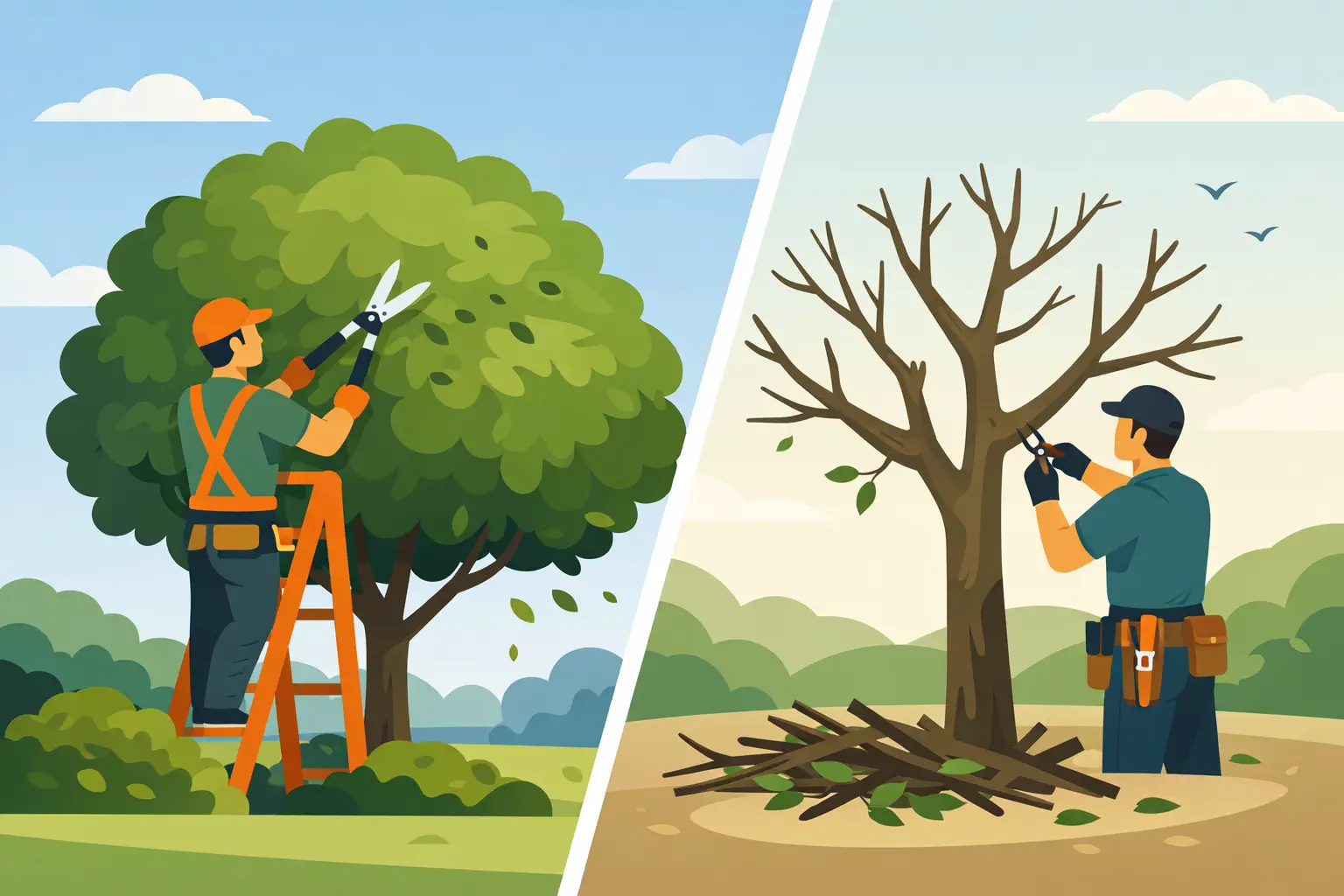
If you are looking at low branches over a driveway or dead limbs hanging after a storm, it is fair to ask: is tree trimming and pruning the same thing? In everyday conversation, people use the terms like they mean the same job. In tree care, they overlap, but they are not exactly the same. The difference matters because the goal of the work affects how the tree is cut, when the work should happen, and what kind of result you can expect.
For homeowners and property managers in Plymouth and the West Metro, that is more than word choice. A tree cut for appearance is handled differently than a tree cut for health, clearance, or risk reduction. When the right service is matched to the right problem, the work is safer, cleaner, and better for the tree long term.
Is tree trimming and pruning the same thing in practice?
The short answer is no. Tree trimming usually refers to cutting back overgrown branches to improve shape, manage size, or create clearance. Tree pruning is more focused on the health and structure of the tree. That can include removing dead, diseased, weak, or poorly attached limbs, thinning specific areas, or guiding young trees into stronger growth patterns.
That said, the two services often happen during the same visit. A crew may prune deadwood out of a maple while also trimming branches away from a roofline. This is why the terms get blended together. On the job, there is often some of both. The key difference is the purpose behind the cut.
If the main goal is appearance and clearance, most people call it trimming. If the main goal is tree health, structure, and long-term performance, it is usually called pruning.
Why the difference matters
A branch is not just a branch. Where it is attached, how large it is, and why it is being removed all affect the result. A cut made in the wrong place can leave a wound the tree struggles to close. Removing too much canopy at one time can stress the tree, especially during hot, dry periods. Leaving dead or cracked limbs in place can create a safety issue near homes, sidewalks, or parking areas.
That is why professional tree work starts with the objective. If a property manager needs truck clearance in a lot, the work needs to preserve safe clearance without overcutting the tree. If a homeowner has a crabapple with rubbing limbs and dense interior growth, selective pruning may be the better answer than a broad trim.
Using the right approach also helps avoid the common problem of trees being cut too aggressively for a quick visual change. That might make a yard look tidier for the moment, but it can lead to weak regrowth, sunscald, and more maintenance later.
What tree trimming usually includes
Tree trimming is often the service people request when branches are too close to something. That might be a house, garage, fence, driveway, sidewalk, play area, or street. It can also mean shaping a tree so it looks more balanced and less overgrown.
In residential settings, trimming often focuses on practical property concerns. You may want more clearance over a lawn, less interference with gutters, or fewer limbs brushing the roof during windy weather. In light commercial settings, trimming may help with sightlines, signage visibility, pedestrian access, or keeping branches away from parked vehicles.
A good trim should still respect the tree’s natural form. It should not leave a tree hacked back, lopsided, or stripped out just because the immediate goal was clearance. Clean cuts and balanced removal matter.
What pruning usually includes
Pruning is more selective. It targets branch health, structural issues, and future growth. Deadwood removal is one of the most common examples. So is taking out diseased limbs, broken branches, crossing branches, and weak branch unions that may fail later.
Pruning can also mean thinning crowded areas to improve airflow and light penetration, especially in dense canopies. On younger trees, pruning may be done to encourage a stronger structure as the tree matures. On mature trees, the goal is often to reduce risk and preserve stability without taking away more live growth than necessary.
This is where experience matters. Not every questionable-looking branch should be removed, and not every healthy branch should stay. It depends on species, age, location, recent stress, and what the tree has already been through.
It depends on the tree, the season, and the problem
There is no one-size-fits-all answer for when trimming or pruning should happen. Some trees respond well to work during dormancy. Others are better addressed after flowering, or when disease and insect pressure are lower. Storm-damaged limbs, of course, are a different situation. If a branch is cracked, hanging, or threatening a structure, safety comes first.
In Minnesota, season matters. Winter can be a good time for many types of pruning because branch structure is easier to see and some trees experience less stress when cut during dormancy. But timing still depends on species and condition. Oaks, for example, require extra care because improper timing can raise disease concerns.
This is also why routine maintenance is easier than waiting until a tree becomes a problem. Smaller, well-timed cuts are usually better for the tree than major correction after years of overgrowth or neglect.
Signs you may need trimming, pruning, or both
Some issues are easy to spot. A limb scraping the house, branches blocking a walkway, or a canopy hanging too low over the driveway often point to trimming. Dead branches, cracked limbs, interior rubbing branches, and heavy storm damage point more toward pruning.
Many properties have both problems at once. A large shade tree may need deadwood removal in the upper canopy, selective thinning for wind movement, and lower limb trimming for yard clearance. That does not mean you need to know the perfect term before calling. What matters is describing what you see and what is bothering you.
A good tree care company should be able to look at the tree, explain what is needed, and recommend the right scope of work without turning it into a guessing game.
The biggest mistake: cutting too much
One of the most common problems in tree care is overcutting. Some property owners want a dramatic reduction because they are tired of leaves, shade, or cleanup. Others have had a tree neglected for years and want it cut way back all at once. The problem is that heavy canopy removal can shock the tree and create a flush of weak new shoots.
This is especially true when topping is involved. Topping removes large sections of the crown in a way that ignores natural branch structure. It may make a tree shorter for the moment, but it often creates faster regrowth, poorer branch attachment, and a more unnatural appearance. It can also increase future risk instead of reducing it.
A better approach is targeted trimming or pruning based on a clear objective. That usually gives you better clearance, a healthier tree, and less cleanup later.
What to expect from professional tree care
Whether the work is called trimming, pruning, or both, the process should be straightforward. First comes an assessment of the tree, nearby structures, and access. Then the scope of work should be clearly explained – what will be cut, why it is being removed, and how the crew plans to protect the property during the job.
For homeowners and managers, this matters because tree work is not just about the tree. It is also about roofs, siding, lawns, fences, neighboring property, and safe cleanup. A dependable crew should be thinking about drop zones, rigging, traffic around the work area, and what the site will look like when the job is done.
That practical side is where a company like Xtreme Tree Service MN can make a real difference. The best experience is not flashy. It is clear communication, safe execution, and a clean site when the work is finished.
So, which one do you need?
If your tree is overgrown, crowding the house, or blocking usable space, you probably need trimming. If it has dead, damaged, diseased, or poorly structured limbs, you probably need pruning. If your tree has not been maintained in years, there is a good chance you need a mix of both.
You do not have to lead with the right vocabulary. Just start with the problem. Are branches too close to the roof? Is there storm damage? Does the tree look uneven, stressed, or unsafe? Those details are more useful than the label.
The right tree work should solve the problem in front of you without creating a bigger one later. If you are unsure whether a tree needs trimming, pruning, or removal, the safest next step is a clear estimate from someone who can look at the tree, explain the options, and do the work without cutting corners.