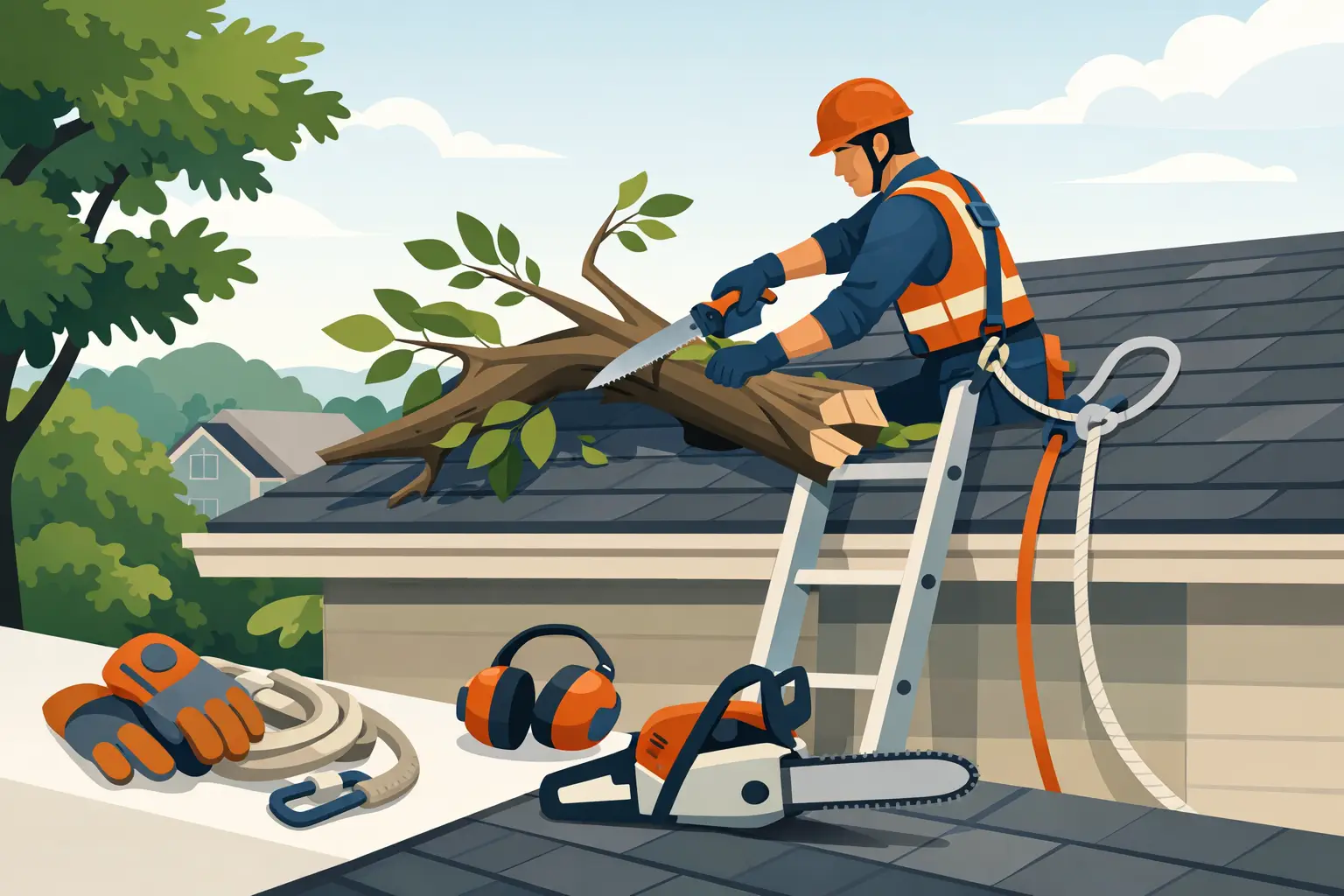
A branch on the roof is never just yard debris. It can crack shingles, dent flashing, crush gutters, and turn a small problem into a leak the next time it rains. Tree branch removal from roof areas needs to be handled carefully, especially after storms when surfaces are slick and the damage is not always obvious from the ground.
For homeowners and property managers in Plymouth and the West Metro, the main question is usually simple: can this wait, or does it need immediate attention? The answer depends on the size of the branch, where it landed, and whether the roof structure took a hit. What matters most is keeping people safe, preventing more damage, and getting the debris off the home the right way.
When tree branch removal from roof work becomes urgent
Some situations need same-day attention. If a large limb is still resting on the roof, pushing into the edge of the house, or hanging over an entry, it should be treated as a hazard. The same goes for branches that pulled down electrical service lines, broke through decking, or shifted enough weight onto one area of the roof that you can see sagging.
Smaller branches can still cause trouble. A limb that looks light from the yard may have several pressure points against shingles, vents, or gutters. If it moves with wind, it can scrape away granules, bend flashing, or open a path for water. In winter, that risk can get worse if snow or ice adds weight.
If there is any chance the branch is touching utility lines, stay clear and call the utility provider first. Tree crews can handle the wood, but power line hazards need to be addressed before anyone gets close.
Why DIY roof branch removal goes wrong
Most property owners already know climbing onto a damaged roof is risky. What gets missed is how often the roof itself becomes part of the hazard. Wet shingles are slippery. Hidden soft spots can give way. A branch may look stable until a cut is made and the whole load shifts.
That is why roof branch removal is not just a matter of using a chainsaw and dragging pieces off. The crew needs to control weight, plan cut points, and protect the roofing material underneath. In some cases, the safest move is not to cut from the roof at all, but to lift or rig sections from the ground or from an access point that keeps pressure off the structure.
There is also the issue of secondary damage. Pulling a limb across shingles can tear them. Letting cut sections roll into a valley or gutter can crack more material than the original impact did. A rushed cleanup often costs more than the branch itself.
What a professional crew looks for first
Before removal starts, a good crew checks the whole scene, not just the branch. That includes the roof pitch, the point of impact, nearby windows, gutters, utility lines, landscaping below, and whether the tree is still attached and under tension.
If the branch came from a broken but standing tree, the remaining canopy matters too. One hanging limb can be holding another in place. What looks like a simple roof cleanup can turn into a larger hazard reduction job if the tree is split, unstable, or likely to drop more material.
The roof surface also has to be read correctly. Asphalt shingles, metal roofing, and flat roof systems each react differently under load. A branch lying across a ridge cap is different from one driven into a valley or resting over a dormer. The removal plan should match the structure, not just the size of the wood.
The safest approach to branch removal from a roof
In most cases, the goal is controlled removal in small sections. That means reducing weight gradually and keeping pieces from scraping, sliding, or falling into vulnerable areas. Sometimes a branch can be lifted free with ropes after strategic cuts. Other times, it has to be dismantled section by section where it sits.
Property protection matters as much as the cutting itself. Tarps, plywood protection, and controlled lowering methods help prevent damage to siding, decks, shrubs, and fences below. Cleanup should include more than the obvious wood. Twigs, bark, leaf debris, and roofing granules often collect in gutters and around downspouts after impact.
For storm calls, speed matters, but so does patience. The fastest safe job is usually the one where the crew takes a few extra minutes to set the work up correctly instead of fighting a bad angle on the roof.
Signs the roof may need repair after removal
Once the branch is off, the roof still needs a careful look. Some damage is easy to spot, like crushed gutters or missing shingles. Other issues take a closer inspection. Lifted tabs, punctures around vents, loosened flashing, and bruising in the shingle mat can all lead to leaks later.
Inside the home, watch for water stains, damp insulation, or new drafts in the attic. Not every roof hit causes immediate interior damage, but small openings can show up after the next heavy rain. If the branch struck near a chimney, skylight, or roof edge, those transitions deserve extra attention because they are common leak points.
This is where clear communication helps. A dependable tree crew should tell you what they saw, what they removed, and whether roof damage appears likely from their view. They are not replacing the roofer, but they should leave you with a clear understanding of the condition they found.
Storm damage adds pressure, but the process should still be clear
After a storm, homeowners are often dealing with multiple problems at once. A limb on the roof, a blocked driveway, debris in the yard, and concern about more wind coming through can make every decision feel urgent. That is exactly when a straightforward process matters most.
You want a crew that can assess the hazard quickly, explain what needs to happen first, and carry out the work without turning the property into a bigger mess. Safe execution, direct communication, and full cleanup are not extras in storm work. They are the baseline.
For property managers, response time is only part of the job. Tenant safety, access to walkways, and protecting surrounding vehicles or structures all matter. If the branch affects a shared entry, parking area, or light commercial building, the cleanup plan needs to account for people moving through the site while the work is happening.
What to expect from a professional service call
A solid service visit should feel simple. First comes the site review and hazard check. Then you get a clear explanation of the removal approach, what equipment is needed, and whether there are signs of roof damage or additional tree instability. If the tree itself also needs trimming or removal to prevent a repeat problem, that should be discussed directly rather than left vague.
The work should be performed with attention to the house and surrounding landscape, not just the branch. After removal, debris should be hauled away and the area left clean. For many homeowners, that cleanup piece is a big part of whether the job feels finished.
This practical, no-pressure approach is one reason local companies like Xtreme Tree Service MN earn repeat calls. People want the hazard handled, the property protected, and the site cleaned up without chasing answers.
Preventing the next branch-on-roof problem
Not every roof strike can be avoided, especially in severe weather. But many can. Trees with overextended limbs, deadwood over the house, weak branch unions, and storm-damaged canopies should be addressed before they fail. Regular pruning does more than improve appearance. It reduces the chance of impact, lowers roof abrasion from overhanging limbs, and helps identify structural issues early.
It also helps to think beyond the obvious branch directly over the roof. Limbs off to the side can break and swing into the home during high winds. Trees that lean away from the house can still send debris toward it if the canopy is unbalanced or partially decayed.
A good inspection is not about removing every branch near a structure. Shade and clearance have to be balanced, and every property is a little different. The right plan depends on the species, branch structure, roof design, and how exposed the site is to wind and snow load.
If a branch is already on your roof, the safest move is usually the simplest one: keep people clear, avoid climbing up for a closer look, and get experienced help on site. Quick action protects the house, but careful work is what keeps a bad day from getting more expensive.