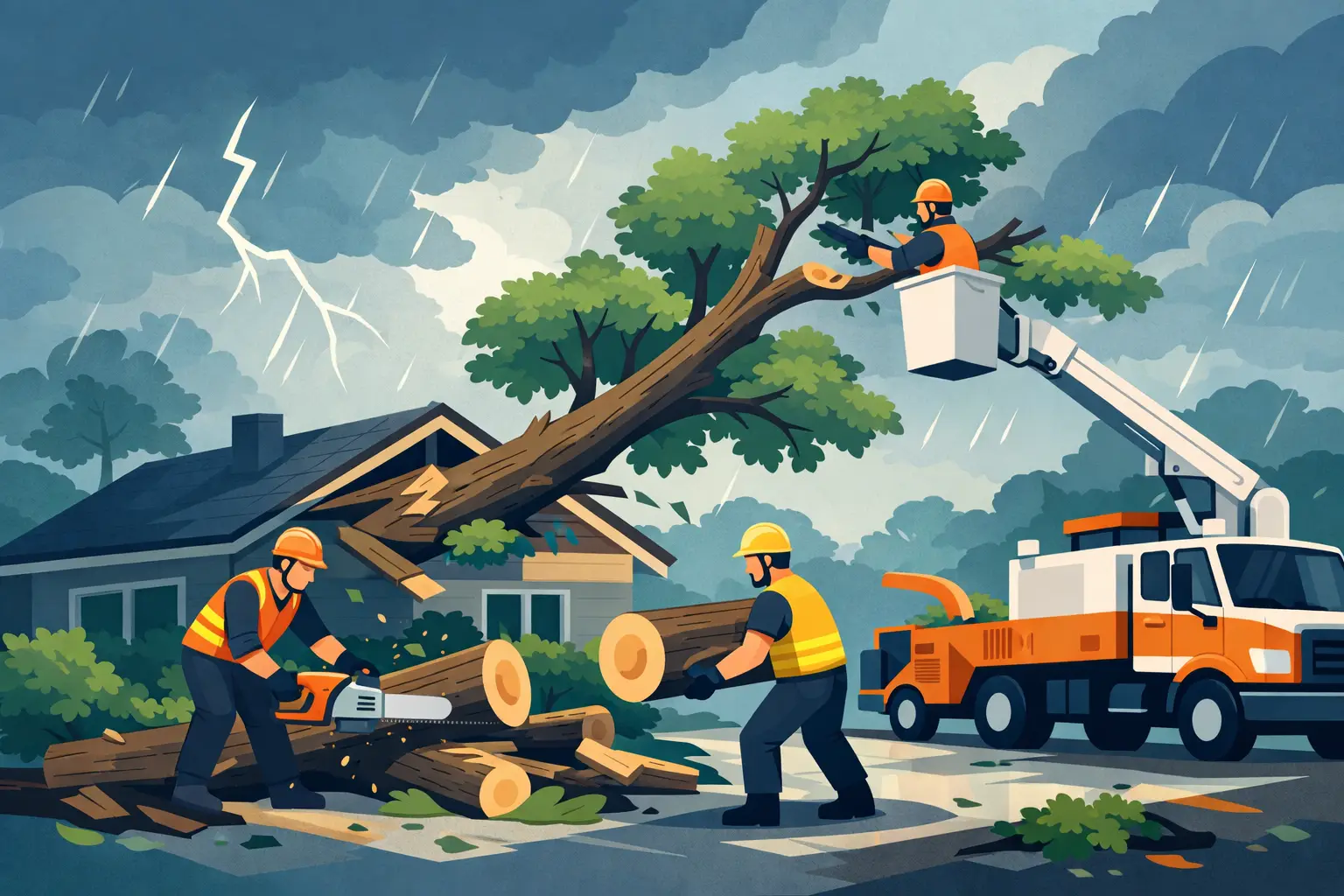
When a tree comes down across a driveway at 2 a.m. or a split limb is hanging over the roof after a windstorm, the problem changes fast. Emergency storm damage tree removal is not regular tree work on a tighter schedule. It is hazard work, and the first priority is making the area safe without causing more damage to the house, garage, fence, or surrounding trees.
In Plymouth and across the West Metro, storm damage often looks worse in the dark, but that does not mean every situation should be handled immediately by whoever has a chainsaw. Some jobs need urgent response. Some need daylight, a plan, and the right equipment. Knowing the difference can protect your property and keep people out of harm’s way.
When emergency storm damage tree removal is truly urgent
A tree emergency usually comes down to risk. If a tree or large limb is blocking access, resting on a structure, leaning into power lines, or hanging in a way that could drop without warning, it needs prompt professional attention. The same goes for storm-damaged trunks that have partially failed but have not fully hit the ground. Those are often under tension, and they can shift suddenly during cutting.
Not every broken branch is an emergency. If debris is down in the yard away from structures and there is no immediate danger to people, vehicles, or buildings, the job may still be important but not necessarily after-hours urgent. That distinction matters because safe tree work depends on visibility, access, and a clear removal plan.
The biggest mistake property owners make after a storm is treating a damaged tree like normal cleanup. A branch that looks stable may be twisted into the canopy above it. A trunk that appears down may still be supported by the roofline or another tree. Storm loading creates unpredictable pressure points, and that is where injuries and property damage happen.
What to do first after storm damage
Start by keeping people back. Children, pets, tenants, and neighbors should stay clear of the area until the tree is assessed. If the damage affects a home, detached garage, sidewalk, or shared access point, give the hazard more space than you think it needs. Trees can roll, settle, or drop additional limbs after the storm passes.
If power lines are involved, stay away and call the utility provider right away. Do not approach the tree, the ground around it, or anything it is touching. Wet ground and hidden line contact can turn a tree emergency into an electrical emergency.
If it is safe to do so, take a few photos for insurance and move vehicles out of the area. After that, the main job is to get qualified help on site. A professional crew can determine whether the tree should be removed in sections, stabilized first, or left untouched until another hazard is addressed.
Why storm-damaged trees are different from standard removals
Standard removals are planned. The crew can evaluate structure, choose drop zones, and work through the tree in a controlled sequence. Storm work is different because the tree has already failed in some way. The canopy may be hung up in another tree. The root plate may be lifted. The trunk may be split but still standing. Debris may also be mixed with fencing, roofing, landscaping, or utility obstructions.
That changes the entire job. Safe removal often requires more rigging, more sectioning, and more caution around shifting weight. In residential neighborhoods like Plymouth, Minnetonka, and Maple Grove, there is also less room for error. Houses are close, driveways are narrow, and ornamental plantings or backyard structures can make access tight.
A good emergency response is not just about getting the tree off the property fast. It is about getting it down in a controlled way, protecting what can still be protected, and cleaning up thoroughly so the site is actually usable again.
What a professional crew should look for on arrival
The first step is assessment. Before any cutting starts, the crew should identify where the tree is loaded, what it is resting on, and what could move once weight is removed. They should also look at access routes for equipment, conditions underfoot, and nearby targets such as windows, siding, sheds, parked cars, and neighboring property.
Then comes the work plan. In some cases, the safest move is to remove smaller limbs first to reduce weight. In others, the trunk must be stabilized before anything else happens. If the tree is on a roof, removing the wrong section first can shift more load onto the structure. That is why storm response takes judgment, not guesswork.
Cleanup matters too. After the tree is down, there is still brush, wood, sawdust, and often smaller broken limbs scattered through the yard. A dependable company does not treat cleanup like an extra. It is part of finishing the job right.
Emergency storm damage tree removal and insurance
It depends on the situation, but many homeowners want to know two things right away: who pays for it, and what should be documented. In general, insurers care about the cause of the damage, what was damaged, and what was necessary to prevent further loss. Clear photos and a straightforward record of what happened can help.
That said, insurance questions should not delay a safety response when a tree is creating an immediate hazard. If access to the home is blocked or a damaged tree is threatening further structural damage, the priority is making the property safe. Documentation can happen alongside that process.
Property managers often have an extra layer to consider because they may be responsible for tenant safety, common areas, parking access, and liability exposure. In those cases, speed and communication matter just as much as the removal itself.
How local conditions affect storm tree work
In the West Metro, heavy snow, ice loading, straight-line wind, and saturated soil can each create different types of failures. Ice tends to snap limbs and overload crowns. Wind can split trunks or push whole trees into neighboring canopies. Saturated ground can loosen root systems, especially with shallow-rooted trees or those already weakened by age or decay.
That is one reason local experience matters. A crew familiar with the area understands common tree species, typical storm patterns, and the spacing challenges found in suburban lots. They also know that emergency work is rarely just about one tree. A storm-damaged maple over the driveway may be the obvious issue, but nearby branches, cracked leaders, or partially uprooted trees may be part of the same risk picture.
What homeowners and property managers should expect
You should expect direct communication, a realistic timeline, and a clear explanation of what can be done now versus what may need follow-up once the immediate hazard is gone. Not every storm job is a one-visit fix. Sometimes the emergency portion is securing the site and removing the highest-risk sections first, with final trimming or complete removal scheduled once conditions improve.
You should also expect attention to property protection. That means planning around siding, hardscapes, fences, lawn impact, and remaining trees whenever possible. In emergency conditions, perfection is not always possible, but care and control still matter.
At Xtreme Tree Service MN, the work is centered on safe removal, clear communication, and thorough cleanup because those are the things people need most when a storm leaves a mess behind. Fast estimates help. Straight answers help more.
When waiting can make things worse
Some storm damage gets more dangerous with time. A cracked trunk can separate further after the wind stops. A branch hung over a roof can drop after temperatures change. A partially uprooted tree may continue to lean as the soil dries or shifts. Even if the storm has passed, the hazard can still be active.
That is why it makes sense to get damaged trees assessed quickly, even if the property looks calm again by morning. Early evaluation can prevent extra roof damage, blocked access, and avoidable injury.
Storms are disruptive enough without adding guesswork. If a tree is down, split, leaning, or hanging where it should not be, the safest next step is simple: keep clear, document what you can, and have a qualified crew handle the removal with a plan. A fast response is good. A safe one is what protects your property when it counts.