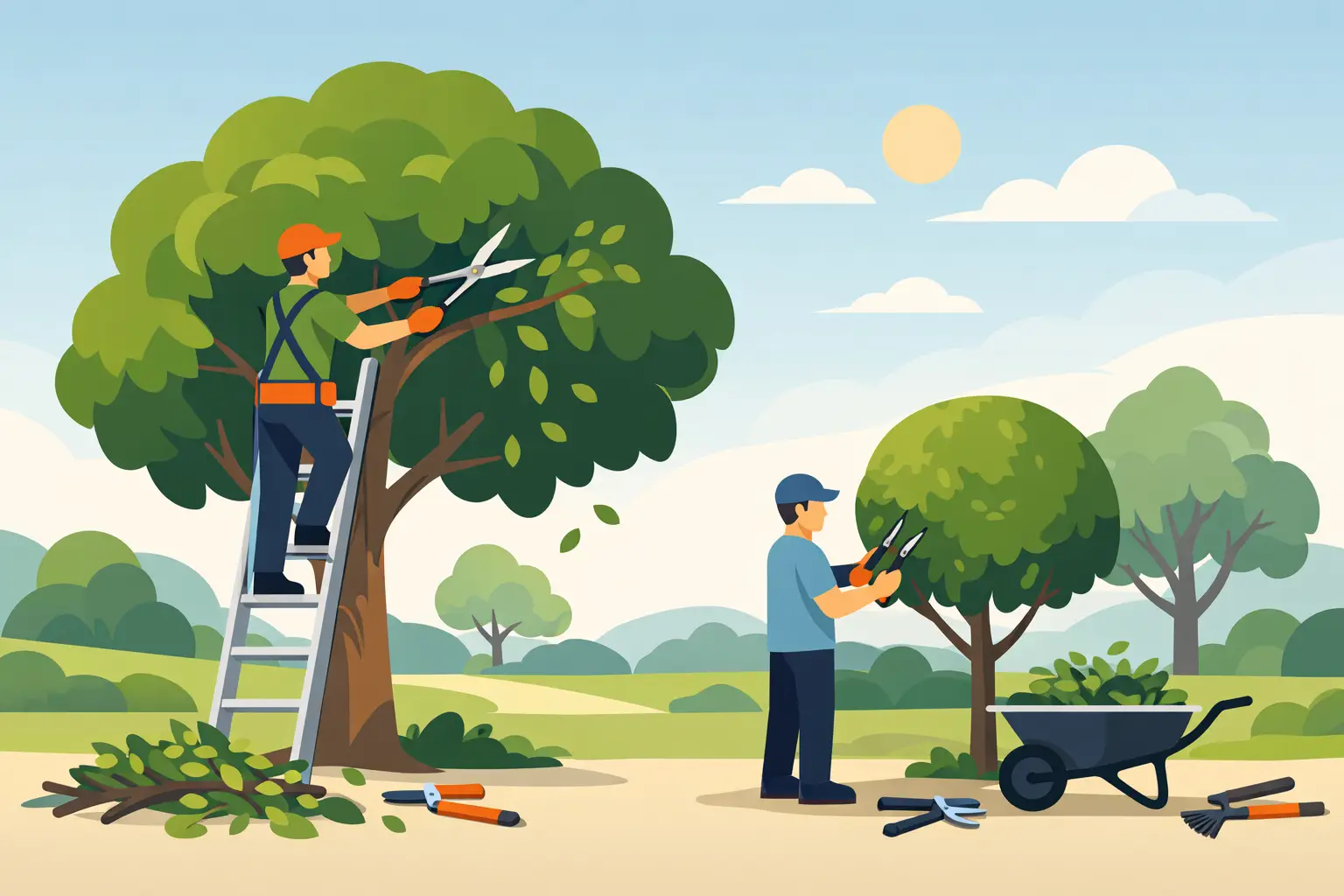
A branch rubbing your roof or hanging over a driveway is more than an eyesore. It can turn into property damage, blocked access, or a safety issue fast. If you have ever asked what is tree trimming and pruning, the short answer is this: both involve cutting branches, but the goal matters. One is often about shape and clearance. The other is about the tree’s health, structure, and long-term growth.
For homeowners and property managers in Plymouth and the West Metro, that difference matters. The right cut at the right time can reduce risk, improve appearance, and help a tree stay stronger through wind, snow, and heavy seasonal growth. The wrong cut can stress the tree, create weak regrowth, or leave it vulnerable to decay.
What Is Tree Trimming and Pruning?
Tree trimming usually refers to cutting back overgrown branches to improve appearance, maintain clearance, or keep a tree away from structures, power lines, walkways, and driveways. It is often the term people use when a tree looks too full, too low, or too close to something important.
Pruning is a little more specific. It focuses on the tree’s health and structure by removing dead, damaged, diseased, weak, or poorly placed branches. Good pruning helps a tree grow in a safer, stronger pattern over time.
In real-world residential work, the two often overlap. A crew may trim a canopy away from a roofline while also pruning out deadwood and crossing limbs. That is why many people use the terms together. The work can look similar from the ground, but the reason behind each cut is what separates them.
Why Tree Trimming and Pruning Matter
A tree does not need to be falling apart to need attention. Many problems start small. A low branch over a sidewalk, a limb pushing into shingles, or deadwood hidden high in the canopy can sit unnoticed until weather or weight makes it worse.
Regular trimming and pruning help reduce those risks before they become urgent. They can improve clearance around homes, garages, fences, and parked vehicles. They can also reduce the chance of broken branches during storms, especially when heavy snow or strong wind hits an already crowded canopy.
There is also the health side. Dead or damaged limbs can attract pests and allow decay to spread. Branches that cross and rub can create wounds. Overly dense growth can limit airflow and light penetration, which can make some trees more prone to disease issues.
Then there is appearance. A well-maintained tree looks cleaner, more balanced, and better suited to the property around it. That matters for homeowners who want curb appeal and for property managers who need grounds to look cared for without creating liability concerns.
Tree Trimming vs. Pruning
If you want the simplest way to think about it, trimming is often for management and pruning is often for health. Trimming keeps trees in bounds. Pruning keeps trees in better condition.
That said, it is not always one or the other. A mature maple near a house may need trimming for roof clearance and pruning to remove weak branch unions. A crabapple may need light shaping plus the removal of dead interior growth. A storm-damaged tree may need immediate pruning for safety first, then follow-up trimming later to restore balance.
This is why a one-size-fits-all approach does not work well. Species, age, condition, location, and recent weather all affect what should be cut and what should stay.
Common Reasons a Tree Needs Attention
Most service calls come down to a few practical issues. Branches may be hanging over the house, dragging low over a driveway, blocking visibility, or dropping deadwood into the yard. Sometimes the tree has grown too dense and the canopy feels heavy. In other cases, there is obvious storm damage or cracked limbs that need quick action.
You may also notice signs that are less dramatic but still worth addressing. Limbs crossing inside the canopy, branches growing toward the center, sprouts shooting up in weak clusters, or one side of the tree getting too long and unbalanced are all things a trained crew will look at.
For younger trees, pruning can be about setting a good structure early. For mature trees, it is more often about maintaining safety, managing size, and removing problem limbs without overcutting.
When Is the Best Time to Trim or Prune?
It depends on the tree and the reason for the work. In many cases, dormant season pruning is a strong option because the branch structure is easier to see and the tree is under less stress. That is often late fall through winter in Minnesota, though timing can vary by species.
But not every job should wait for the ideal season. If a branch is broken, rubbing the house, hanging over a high-traffic area, or showing clear damage, safety comes first. Hazard reduction and storm cleanup are done when needed, not when the calendar is perfect.
Some trees also respond better to pruning at specific times of year. Others should be avoided during periods when certain diseases or pests are more active. That is one reason experienced tree care matters. Good timing helps, but proper technique matters just as much.
How Proper Tree Pruning Is Done
Good pruning is not just cutting branches until the tree looks smaller. Every cut affects the tree. Done right, cuts are made with a clear purpose and at the correct location so the tree can close over the wound more effectively.
That means removing dead, damaged, or poorly attached limbs first, then evaluating spacing, balance, and overall structure. It also means avoiding aggressive topping or random cutting that leaves stubs and weak regrowth. Topping may make a tree shorter in the moment, but it often creates a bigger problem later with fast, unstable shoots and increased stress.
A careful approach also protects the property below. Tree work around homes, garages, fences, decks, and landscaping takes planning. The goal is not just to cut branches. It is to do the work safely, control where material goes, and leave the site clean when the job is finished.
What Homeowners Should Not Ignore
If you are not sure whether a tree needs trimming or pruning, start with what you can see from the ground. Dead limbs, cracked branches, canopy sections with no leaves during the growing season, and limbs touching the roof are clear warning signs. Large branches extending over play areas, driveways, or entrances also deserve attention.
Watch for changes after storms too. A branch does not have to be on the ground to be damaged. Sometimes it is split and still hanging in place. Sometimes the whole canopy shifts and puts more weight on one side. If something looks off, it is worth getting it checked before the next storm adds more stress.
The same goes for trees close to structures. Branches that seem harmless now can become a problem as they keep growing. Early trimming is usually simpler and less disruptive than waiting until the limb is heavy, extended, and harder to remove safely.
Why Professional Help Is Usually the Safer Call
Small, reachable branches are one thing. Larger pruning and trimming near homes, power lines, garages, or steep yards is different. The risks are real. Falling limbs, ladder accidents, hidden decay, and unpredictable branch movement can turn a routine job into an emergency.
Professional tree crews bring the equipment, climbing skill, rigging knowledge, and job planning needed to do the work safely. They also know how much to remove without overstressing the tree. Cutting too much at once can hurt recovery, trigger weak regrowth, or leave the canopy unbalanced.
For local property owners, that usually comes down to peace of mind. You want the tree handled correctly, your house and yard protected, and the debris hauled away without a mess left behind. That straightforward, safety-first approach is what companies like Xtreme Tree Service MN are built around.
What to Expect From a Good Tree Service
A solid trimming or pruning job should start with a clear look at the tree, the surrounding property, and the reason the work is needed. You should understand what is being removed and why. There should be a plan for protecting nearby structures, landscaping, and access areas.
The work itself should be controlled and deliberate, not rushed. And cleanup matters. When the crew leaves, the property should look better, safer, and cleaner than when they arrived.
If you are looking at a tree and wondering whether it needs trimming, pruning, or full removal, trust that instinct and get it looked at. A quick estimate now is often the easiest way to prevent a bigger problem later.