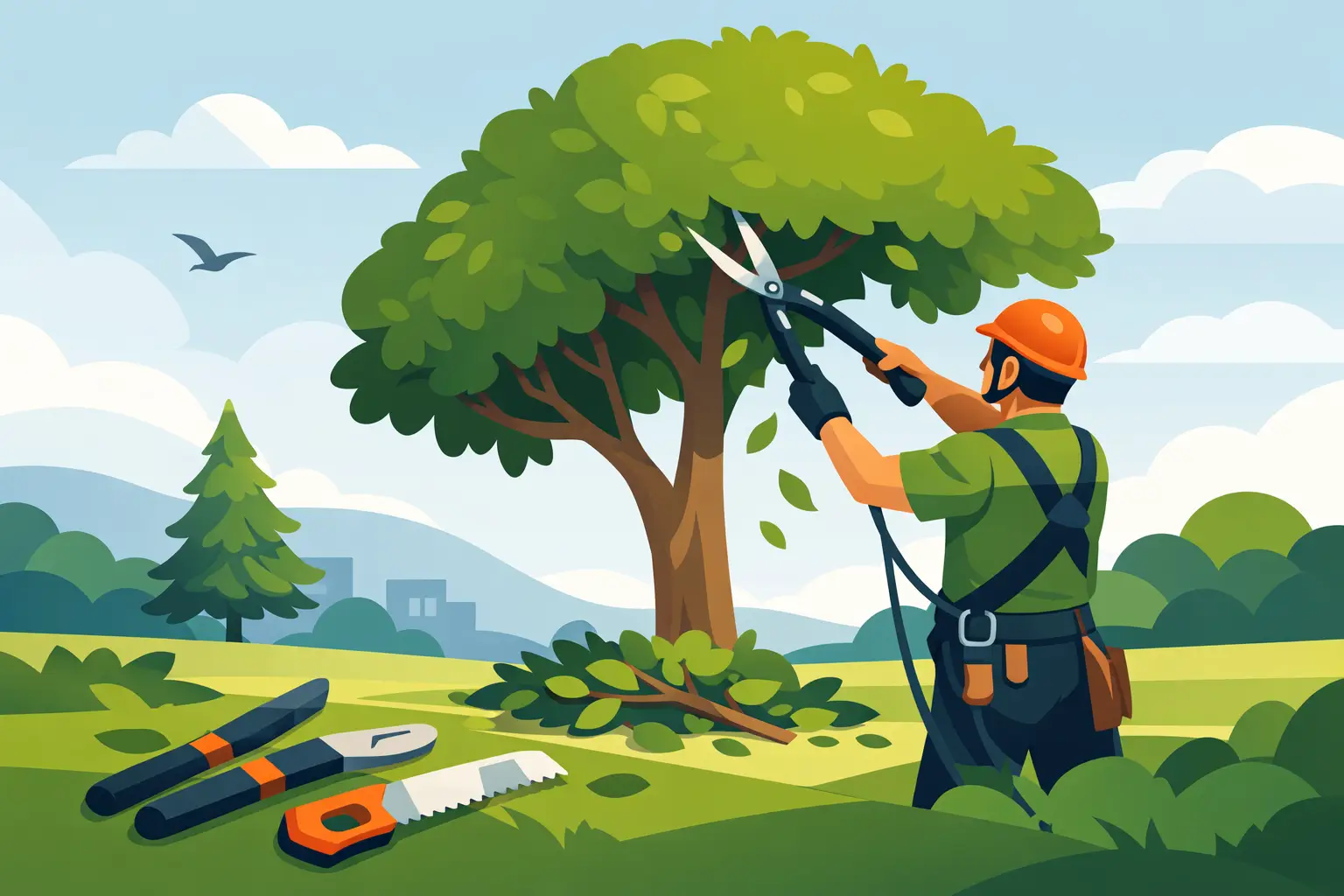
A branch over the driveway does not look urgent until heavy snow, wind, or summer growth brings it down lower than it should be. That is usually when tree trimming and pruning move from a nice-to-have job to something that needs attention now. For homeowners and property managers in Plymouth and the West Metro, good tree care is not just about appearance. It is about keeping limbs away from roofs, walks, vehicles, and power lines while helping trees grow in a stronger, healthier shape.
Why tree trimming and pruning matter
Most trees benefit from regular maintenance, but not every cut is helpful. Done correctly, trimming and pruning reduce deadwood, remove weak or crowded growth, and improve clearance around the property. Done poorly, they can stress the tree, leave it more vulnerable to disease, or create future structural problems that cost more to fix.
That is the trade-off people do not always see. Cutting more is not always better. A tree that has been over-thinned or topped may look smaller for the moment, but it often responds with fast, weak regrowth. Those new shoots can become a bigger hazard later, especially in storm-prone conditions.
For property owners, there are practical reasons to stay ahead of the work. Low branches can interfere with mowing, block sidewalks, scrape siding, and limit visibility near driveways. In shaded neighborhoods, neglected canopies can also hold moisture close to roofs and lawns longer than they should. A good trim helps the tree and makes the property easier to manage.
Tree trimming and pruning are not exactly the same
People often use the terms together, and that is fine in everyday conversation, but they usually point to slightly different goals. Trimming is often focused on shape, clearance, and managing overgrowth. Pruning is more selective and is usually done to improve tree health, structure, and long-term growth.
On a residential property, the two often happen at the same time. A crew may remove dead limbs, raise lower branches over a sidewalk, thin a crowded section, and reduce weight on a long limb extending over the house. The key is knowing why each cut is being made.
That matters because every species grows differently. A fast-growing maple in a suburban yard does not respond the same way as an oak, spruce, or ornamental tree near a front entry. Timing, cut placement, and how much is removed all depend on the tree, its condition, and its location.
Signs your trees may need attention
Some warning signs are obvious. Dead limbs, cracked branches, storm damage, and limbs rubbing on the roof should be addressed quickly. Hanging branches and split leaders are not jobs to put off, especially if they are over areas people use every day.
Other signs are easier to miss. You may notice one side of the canopy getting heavier than the other, branches crossing and wearing against each other, or dense interior growth that blocks light and airflow. Trees with old broken stubs, water sprouts, or weak branch attachments can also benefit from corrective pruning before they become a larger problem.
Property managers often run into a different issue: clearance. Trees may be encroaching on parking areas, entry walks, building lines, signage, or shared fences. In those cases, the work is not only about neatness. It is about reducing liability and keeping the site usable.
Timing depends on the tree and the goal
There is no one perfect month for all tree work. In Minnesota, dormant-season pruning is often a smart option for many species because structure is easier to see and the tree is under less active growth stress. Winter work can also reduce the chance of spreading some diseases and insect issues.
But that does not mean every job should wait for winter. Dead, damaged, or hazardous branches should be removed when they are found. Storm cleanup, broken limbs, and immediate clearance issues are safety jobs first. If a branch is threatening a roofline or hanging over a driveway, timing is secondary.
It also depends on the species. Oaks, elms, fruit trees, and ornamental trees can each have different best practices. A light shaping cut on one tree may be fine in summer, while heavier structural pruning on another is better saved for dormancy. That is why an on-site look matters. The right approach depends on the tree in front of you, not a generic calendar.
What good pruning looks like
Good pruning is deliberate. It removes what needs to go without stripping the tree down. A well-pruned tree should still look natural when the job is done. The canopy should be balanced, the structure should make sense, and the cuts should support healthy growth rather than trigger panic regrowth.
That usually means removing dead, diseased, broken, or poorly attached branches first. After that, the focus may shift to spacing, clearance, and reducing strain on overextended limbs. In some cases, selective reduction is better than removing an entire branch. In others, full removal is the safer long-term choice.
What you want to avoid is random cutting from the outer edge or taking too much live canopy at once. Topping is a common example of the wrong approach. It creates large wounds, weak regrowth, and a tree that often becomes more hazardous over time, not less.
Why DIY tree cutting can go sideways fast
A small branch at eye level is one thing. A mature limb over a roof, fence, or garage is another. Tree work gets risky when weight shifts unexpectedly, wood is under tension, or access requires climbing and saw use near structures.
The problem is not just personal safety, though that is reason enough to be careful. It is also property protection. One bad cut can send a limb into shingles, gutters, windows, landscaping, or a neighbor’s yard. Even cleanup becomes harder than most people expect when brush piles, logs, and debris start adding up.
For many homeowners, the smarter move is bringing in a crew that handles the entire job safely, with the right equipment and a clear plan for protecting the site. That means controlled cutting, attention to nearby structures, and cleanup that leaves the yard usable when the work is done.
What to expect from professional tree trimming and pruning
A professional visit should start with a straightforward assessment. The goal is to identify what needs attention, what can wait, and what approach makes sense for the tree and the property. Not every tree needs aggressive work, and a good estimate should reflect that.
From there, the job should be clear. Which branches are being removed, what clearance is being created, how the crew will access the area, and how debris will be handled should all be understood before work begins. That kind of communication matters, especially on occupied homes, rental properties, and sites with nearby landscaping or tight access.
The work itself should look controlled, not rushed. Limbs should be managed with the surroundings in mind. When the job is finished, the difference should be noticeable in the right way: safer clearance, cleaner structure, and a site that is cleaned up instead of left half-finished. That is the standard homeowners and property managers should expect.
A practical approach for West Metro properties
In neighborhoods like Plymouth, Minnetonka, and Maple Grove, many properties have mature trees close to homes, garages, decks, and shared lot lines. That makes routine maintenance more important than it might be on a wide open site. Trees can add privacy, shade, and value, but they also need space management as they grow.
The best approach is usually proactive, not reactive. If a tree is showing deadwood, crowding the roofline, or pushing too far over a drive or walkway, it is better to address it before a summer storm or heavy snow load forces the issue. A measured trim now is often less expensive and less disruptive than emergency work later.
That is the kind of work Xtreme Tree Service MN is built around – safe execution, direct communication, and cleanup that does not leave the property looking like a work zone after the crew pulls out.
When tree work is done right, you should feel the result more than notice the process. The yard is safer. The tree looks better without looking butchered. And you are not waiting for the next storm to find out whether that heavy limb should have been handled sooner.