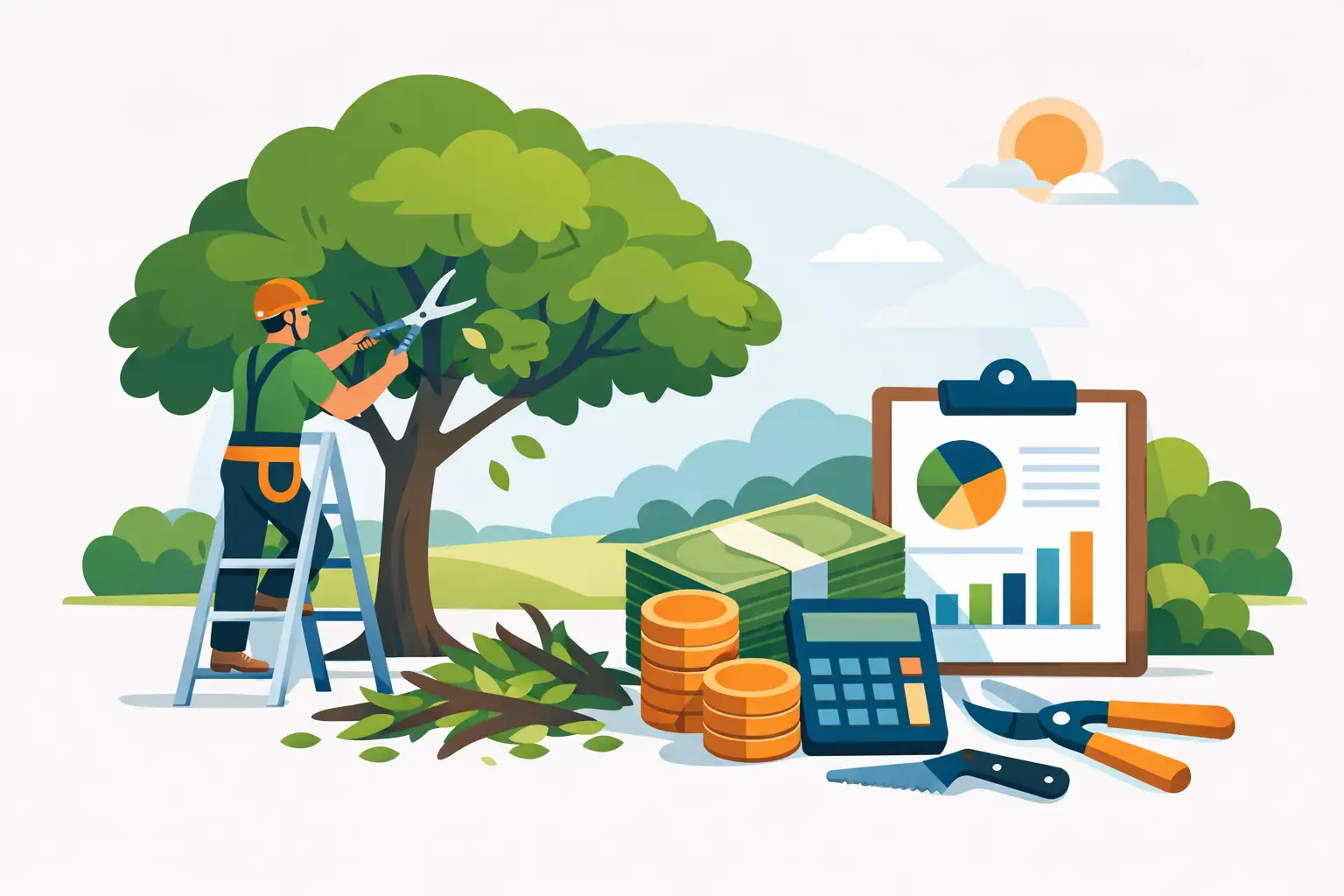
If a branch is hanging over your roof, scraping the house in the wind, or blocking light from the yard, price matters fast. Tree trimming and pruning cost can vary quite a bit, and most of that difference comes down to risk, access, tree size, and how much work the crew actually needs to do to make the tree safe and healthy.
For homeowners and property managers in Plymouth and the West Metro, the hard part is not just getting a number. It is knowing whether that number makes sense. A low bid can leave out cleanup, property protection, or proper pruning cuts. A higher bid may reflect a tougher setup, better equipment, and a safer plan for the tree and the surrounding property.
What affects tree trimming and pruning cost
The biggest factor is usually the size of the tree. A smaller ornamental tree in an open front yard takes less time, less labor, and less equipment than a mature oak spreading over a driveway, fence, and house. As trees get taller and broader, crews need more climbing time, more rigging, and more attention to where every cut branch will land.
The next factor is access. A tree in a wide-open area is simpler to trim than one tucked behind a garage, growing between neighboring properties, or hanging over landscaping, sheds, utility lines, or parked vehicles. Tight work areas slow the job down because every move has to be controlled. That added care protects the property, but it also affects the estimate.
Condition matters too. A healthy tree that needs routine crown thinning or clearance pruning is often more straightforward than a storm-damaged or partially dead tree. Weak limbs, hidden cracks, decay, and uneven weight can turn a standard trimming job into a more technical one. The same is true when branches are already broken and suspended in the canopy.
Cleanup is another pricing variable people sometimes underestimate. Cutting is only part of the work. Hauling brush, chipping limbs, removing wood, raking debris, and leaving the yard clean all take time. Some estimates include full cleanup and hauling, while others may price those items separately.
Typical price ranges homeowners see
There is no one-size-fits-all rate, but in many residential situations, smaller trimming jobs may fall in the low hundreds, while larger or more complex pruning projects can move into the upper hundreds or beyond. If multiple mature trees need work, or if a crew needs climbing, rope rigging, traffic control, or specialty equipment, the total can rise quickly.
As a rough guide, light pruning on a small, accessible tree may cost much less than structural pruning on a large tree near a house. Mid-sized trees often land in the middle, especially when the work includes shaping, clearance from the roof, and deadwood removal. Larger trees with long lateral limbs, limited drop zones, or elevated hazard can cost significantly more because the crew cannot simply cut and drop material.
That is why phone quotes are usually unreliable. Two trees can look similar from the street and still require very different work plans once someone sees the yard, the targets below, and the branch structure up close.
Why one estimate can be much higher than another
A big price gap usually comes from scope, safety standards, or cleanup. One company may be bidding only the basic cuts, while another includes debris hauling, full site protection, and more detailed pruning. If one estimate sounds much cheaper, it is worth asking what is not included.
Insurance and crew experience also matter. Tree work is high-risk work. A properly insured company with trained workers, climbing gear, saws, rigging equipment, and a process for protecting roofs, fences, and landscaping is carrying real overhead. That does not automatically mean every higher quote is better, but it does explain why extremely cheap bids can be a red flag.
There is also a difference between trimming for appearance and pruning for structure, clearance, and tree health. Topping, overcutting, or taking too much live canopy off at once may look like a fast solution, but it can create future problems. Good pruning is selective. It takes more judgment and often more time.
Tree trimming and pruning cost by job type
Routine maintenance pruning is usually the most predictable. This includes removing deadwood, thinning crowded limbs, raising clearance over walkways or driveways, and cutting back growth away from siding or the roof. These jobs are often easier to estimate because the tree is stable and the work has a clear purpose.
Corrective pruning can cost more. This type of work is common when a tree has been neglected, damaged in a storm, or cut poorly in the past. The crew may need to reduce weight on long limbs, improve branch spacing, or remove compromised sections without overstressing the tree.
Hazard pruning is often the most sensitive category. If a cracked limb is hanging over a home, a branch is rubbing utility service lines, or decay has weakened a major lead, the job calls for a slower and more controlled approach. Risk management becomes part of the price.
Seasonal timing can influence cost too, though not always in a simple way. Some homeowners expect winter trimming to be cheaper, but frozen ground, snow cover, and limited access can offset any scheduling advantage. In busy storm seasons, urgent work may also carry different pricing than routine scheduled maintenance.
What to ask before approving an estimate
The best estimate is clear about what will happen on site. Ask whether the price includes debris removal, hauling, and final cleanup. Confirm whether the crew is pruning only selected limbs or addressing the full canopy. If a branch is close to the roof, power service, or fence line, ask how they plan to protect those areas during the work.
It also helps to ask what is not included. Stump grinding, log hauling, extra cleanup, and emergency response are often separate services. If you manage multiple properties, ask whether the price reflects one visit or a broader schedule of work.
A good contractor should be able to explain the reason for the pruning in plain terms. You do not need a lecture on arboriculture. You just need a clear answer on what they are cutting, why it matters, and what the result should be.
When trimming is worth the cost
Not every tree needs immediate work, but waiting too long can raise the price later. Branches that start as a clearance issue can become a roof damage issue. Dead limbs that seem harmless can drop without much warning. Overgrown trees can also shade turf, block sightlines, and crowd structures enough to create repair costs outside the tree work itself.
Regular pruning is often less expensive than corrective work after years of neglect. It can also reduce the odds of storm breakage, especially on mature trees with heavy, extended limbs. For property managers, that matters not just for appearance but for liability and tenant safety.
The value is not only in what gets cut. It is in how the job is done. Safe execution, controlled lowering, and thorough cleanup protect the rest of the property while the work is happening.
Getting the right price, not just the lowest one
The goal is not to chase the cheapest number. It is to get a fair price for work that is done safely, clearly, and completely. In practical terms, that means comparing scope, cleanup, crew approach, and how well the company communicates before the saws ever start.
For local homeowners, a fast estimate with direct answers usually tells you a lot. If a company can explain the work simply, show up when promised, and leave the site clean, that has real value. That is the standard Xtreme Tree Service MN aims to meet on every trimming and pruning job.
If you are looking at a tree and wondering whether the cost will be minor maintenance or a more involved project, the honest answer is that it depends on the tree, the targets around it, and the level of risk. A quick site visit usually clears that up faster than guesswork, and it gives you something even more useful than a price – a plan that makes sense for your property.