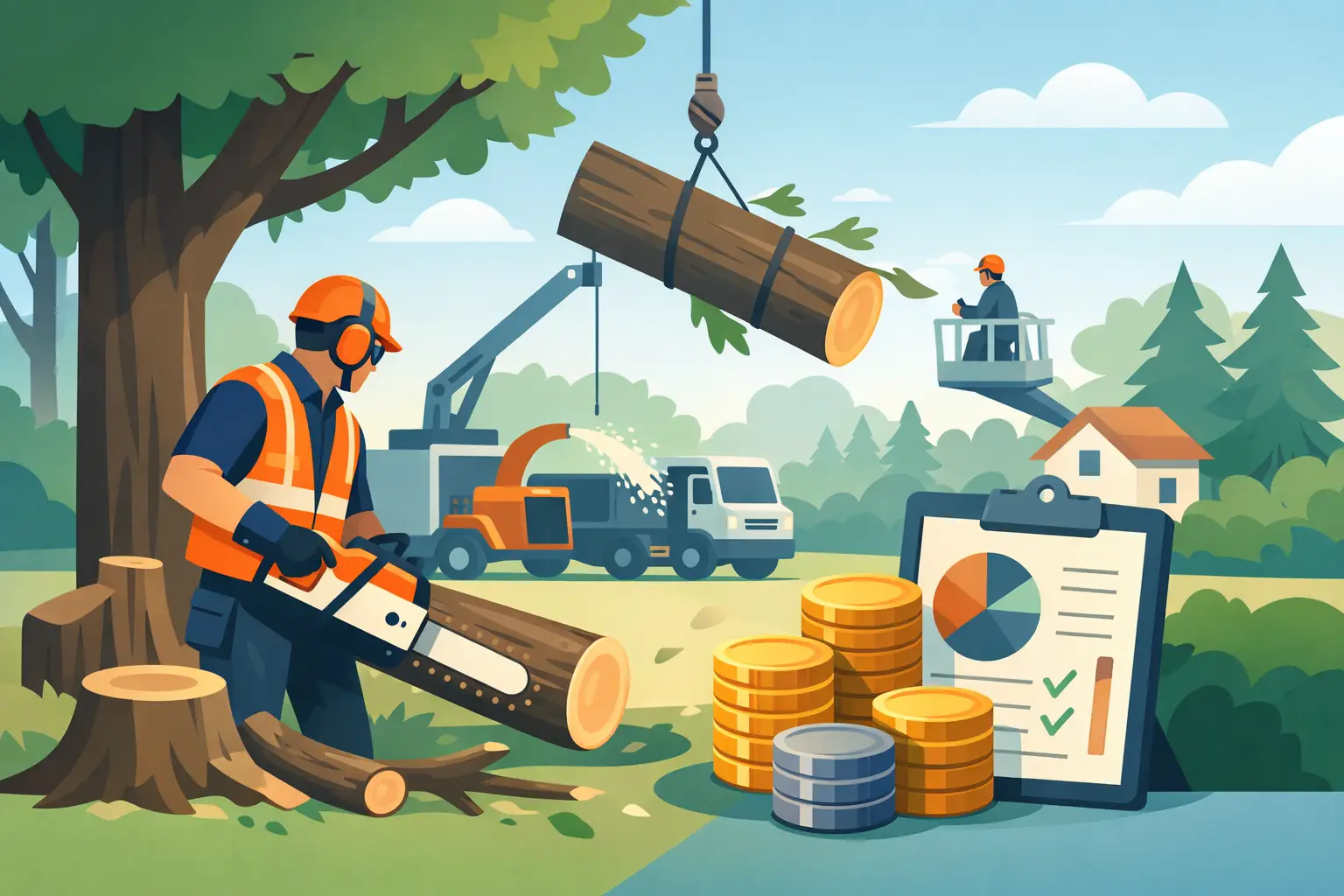
When a tree is leaning over a roof, dropping large limbs, or starting to die near a driveway, most property owners want the same thing – a clear answer on price and timing. Professional tree removal cost depends on the tree itself, the space around it, and how much risk is involved in taking it down safely without damaging the property.
For homeowners and property managers in Plymouth and the West Metro, that price can vary more than people expect. Two trees that look similar from the street can require very different equipment, crew time, and cleanup. That is why a quick online number is only a rough starting point, not a real quote.
What affects professional tree removal cost?
The biggest factor is usually tree size. A smaller ornamental tree in an open yard is faster and simpler to remove than a mature maple or oak with heavy limbs and a wide canopy. More height, more weight, and more wood to haul away generally mean more labor and a higher cost.
Condition matters too. A healthy tree can be predictable to work with. A dead, storm-damaged, split, or partially uprooted tree is often more dangerous because the wood may be brittle or unstable. That changes how the crew approaches the removal and may require more caution, more rigging, or specialized equipment.
Location is another major piece of the price. If a tree sits in the middle of an open yard with room to work, removal is usually more straightforward. If it is overhanging a house, garage, fence, deck, power line, or landscaped area, the job gets slower and more technical. Protecting nearby structures and controlling every section of the tree during removal takes time, skill, and planning.
Access can raise or lower the cost as well. A crew that can get trucks, trailers, or equipment close to the work area can often complete the job more efficiently. If the tree is behind a fence, in a tight backyard, on a slope, or in a spot with limited equipment access, the work may need to be done in smaller pieces and carried out by hand.
Typical price ranges you may see
In general, smaller tree removals may cost a few hundred dollars, while large or hazardous removals can run into the thousands. That is a wide range, but it reflects the reality of tree work. Professional tree removal cost is based on scope and risk, not just on whether a tree is present.
A small tree with easy access and minimal cleanup may fall on the lower end. A medium-sized tree near a home or garage often lands in the middle range. A large mature tree that must be dismantled carefully section by section, with hauling and site protection included, will cost more. Emergency removals after storms can also come at a premium because of urgency, hazardous conditions, and the need to secure the site quickly.
If you get estimates that seem far apart, it is worth looking at what is actually included. One company may price the removal only. Another may include hauling, brush cleanup, log removal, traffic control, protection for the lawn, or final site cleanup. A lower number is not always the lower total once the job is complete.
Why hazard and difficulty change the price fast
Tree removal is not just cutting wood. In many cases, it is controlled dismantling in a confined space. When a tree is close to a structure or shows signs of failure, the crew may need to climb it, rig down sections with ropes, use a lift, or bring in heavier equipment. Each of those steps adds time and complexity.
That matters because the job is priced around safe execution. The more a crew has to protect your house, landscaping, driveway, neighboring property, or utility area, the more careful the process needs to be. Most customers are not paying simply for a tree to disappear. They are paying for it to be removed without creating a bigger problem.
This is especially true after storms. A tree that is hanging, twisted, or partially supported by another tree can be unpredictable. Even if it looks smaller than another tree on the property, it may cost more to remove because the danger level is higher.
Cleanup, hauling, and stump grinding
One of the most common reasons people are surprised by pricing is that they assume every quote includes the same cleanup. It often does not. Some removal quotes include cutting the tree down and piling debris on site. Others include hauling away all brush and wood, raking the area, and leaving the site clean.
Stump grinding is usually a separate service. Removing the above-ground portion of a tree is one job. Grinding the stump below grade is another, and price depends on stump diameter, root flare, and access. If you want the area ready for grass, landscaping, or future use, ask whether stump grinding and chip cleanup are included.
Hauling also matters. Large hardwood sections are heavy, and brush adds up fast. If a job includes full debris removal, log hauling, and a thorough final cleanup, that will affect the price. For many property owners, that is money well spent because it saves hours of extra work and gets the yard back to usable condition faster.
What to ask when comparing estimates
A good estimate should be clear, not vague. You should know whether the price includes removal, hauling, cleanup, stump grinding, and any special equipment needed for the job. If a tree is close to a house or fence, it is also reasonable to ask how the crew plans to protect the property during removal.
Timing is worth discussing too. Some jobs can be handled quickly, while others may need scheduling around weather, equipment availability, or permit requirements. Emergency work is different from routine scheduling, and the quote should reflect that.
It also helps to ask what happens if conditions change once work begins. Sometimes internal decay, hidden storm damage, or poor access is worse than it appeared from the ground. A professional company should explain how it handles those situations before the job starts, not after the fact.
Why the cheapest tree removal quote can cost more later
Price matters, but so does follow-through. Tree work involves safety, liability, and the risk of property damage if the job is done carelessly. A low quote may leave out cleanup, proper equipment, or the time needed to remove the tree safely.
For homeowners, that can mean yard damage, leftover debris, or added charges that were not obvious at the start. For property managers, it can mean delays, tenant complaints, or repeat work to fix a site that was not cleaned up properly. The better question is not just who is cheapest. It is who is clear, responsive, and prepared to do the work right.
That is where direct communication matters. If a company can explain the scope clearly, answer questions promptly, and give you a realistic timeline, you are in a better position to make a solid decision. In tree work, confidence usually comes from details, not sales talk.
Professional tree removal cost in real-world terms
If you are budgeting for a project, think about cost in relation to risk and outcome. Removing a tree before it fails is often less expensive than waiting until it damages a roof, blocks a driveway, or comes down during a storm. The same goes for a declining tree near a garage, fence, or neighbor line. Early action usually gives you more scheduling flexibility and a safer work environment.
For many properties, the right approach is to get an estimate before the issue becomes urgent. That gives you time to weigh the scope, understand what is included, and decide whether you also want stump grinding or pruning on nearby trees while the crew is already on site. Companies like Xtreme Tree Service MN see this often – the best results usually come when the work is planned, clearly scoped, and done with cleanup in mind from the start.
The most useful quote is not the one with the lowest number. It is the one that shows you exactly what the job involves, what the crew will protect, and what your property will look like when the work is finished. If a tree needs to come down, clarity is just as valuable as price.